Sunday, May 26, 2024

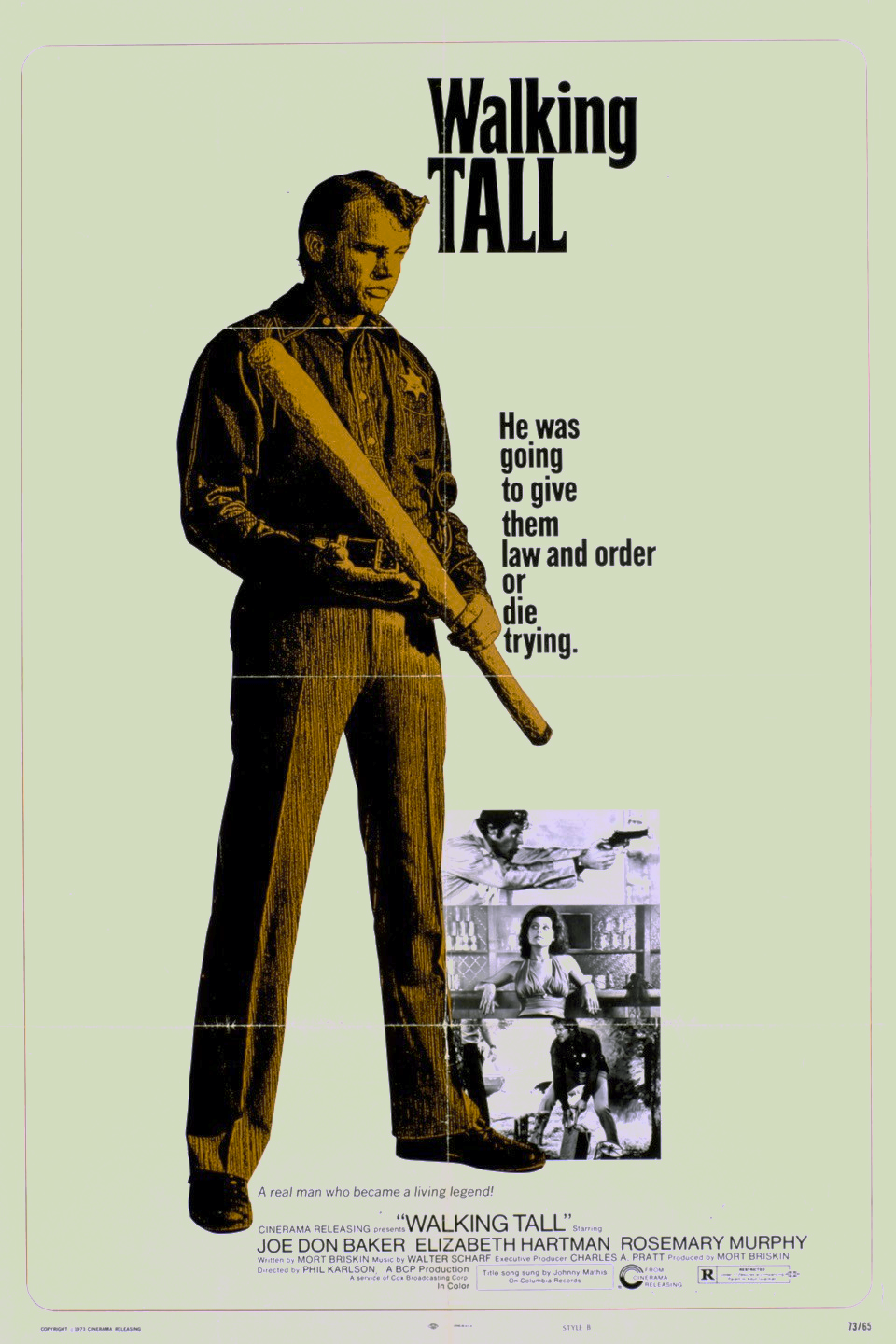
Walking Tall (1973)


Anyone who knows me knows 70s films have my favorite aesthetic. Whether it be the way the film looks, the lighting, the way blood looks. All of those apply to WALKING TALL. The story is also really interesting. In so many other films a cop with a family tends to drag the movie down rather than prop it up. In this I found the family drama and dynamic just as interesting as the cop investigations and action. It also allows Joe Don Baker as Buford Pusser to be a three dimensional character. He's tough, vulnerable, and capable all at once. The southern small town setting makes it feel like a western and a prohibition era film at times, only making it more interesting. 

Synopsis: Based on the life of Tennessee sheriff Buford Pusser, who almost single-handedly cleanup his small town of crime and corruption, but at a personal cost of his family life and nearly his own life. 

I liked the scenes early on showing Buford moving back home, seeing his wife, seeing his kids, and seeing his home. Also seeing the truck he had on the road during his wrestling career. The truck that has "Buford the Bull" written on the side. Seeing him work on logging, and having moments with his family makes him relatable. The film turns really quick, as Buford and his friend Lutie go to The Lucky Spot around 30 minutes in and this is when he gets into a fight with the gamblers who he knows have been cheating. We see Buford's strength but also his wrestling background in this fight as he uses numerous grappling moves, kicks, and elbows to dispatch his attacks until they all gang up on him. 

There are a lot of relevant socio cultural moments throughout. Buford hiring Obra (Felton Perry) to be his deputy was an interesting choice. They had been seen being friends at the logging business before the attack when Buford helps Obra get a job. Buford not only motivates Obra to be a better lawman. Buford goes to him at one point asking him for help to find illegal moonshiners and Obra is reluctant at first. Buford makes the point that whenever you can do something to actually help your people you won't do it. Later on Obra has a moment where he has to confront rowdy white men creating a ruckus in a black bar. Obra asks Buford for help and Buford says you can handle it on your own. Obra makes the point that because he is black in a Tennessee small town that he could get killed just for arresting white men. Buford does realize this and when he makes his way to the bar Obra has cuffed the main offender and has his short torn open. A genuine moment was seeing this white man actually apologize for his behavior the next day. Buford later gets some info from Luan (Brenda Benet) a woman who was eying him at THE LUCKY SPOT. He tells her to leave town to be safe and they have a nice moment where she seems to really like Buford but respects his marriage enough to not make anything else happen. Moments like these can be cut of films to preserve pacing, but at the same time real intimate moments like this make a movie better on a dramatic level. 

I enjoyed seeing both Felton Perry and Bruce Glover in this as deputies. Felton played Harry Callahan's (Clint Eastwood) partner in MAGNUM FORCE. Bruce Glover played Mr. Wint in DIAMONDS ARE FOREVER


The character of Buford Pusser is heroic in many ways. The way he garners support to be Sheriff is interesting. I enjoy his defiance of the corrupt sheriff and judge by showing off his scars in court, something separate from the actual court case but uses it to gain empathy from the jurors and exposing the town's corruption by saying that could happen to anyone if things don't change. The judge making his bail $50,000 in combination with wanting to give him life imprisonment only makes us root for Buford, and against the corrupt townies more. The corrupt and incompetent previous Sheriff tries to run Buford over at one point, instead driving his car off a bridge. Buford saves the Deputy, Grady Coker's (Bruce Glover) life and Grady stands by him the rest of the film. You see different cookouts he has with the men at his home, you see all of them going on raids for the illegal moonshiners. His usage of the long 2X4 as his main weapon instead of a gun also made him fun to watch. When Buford and Obra arrest the moonshiners I had mentioned earlier Buford never has a search warrant or reads them their rights. Something that makes him a flawed character, but also he spends that night reading the whole entire lawbook. The next day he trolls a corrupt judge by putting toilets in his office saying he gets to make the decisions of where people's offices go. Buford gets stabbed, shot, and threatened many times throughout this film and never compromises his morals, never gets scared, and never asks for gratitude. That makes the ending of this film all the more powerful. I haven't wanted to stand up and clap watching a film many times by myself but when this was over I wanted to. I can imagine many people seeing this in a theater in 1973 did stand up and applaud. 


Joe Don Baker as Buford Pusser


The family dynamic actually gave this film more drama. A lot of cop films where family is involved can either work well or just drag the film down. THEY CALL ME MISTER TIBBS is a film where it doesn't work. TIGHTROPE is a film where it does. There are many powerful moments with Buford and his family. His son Mike (Leif Garrett) has a great moment where he shows up to the hospital with his rifle wanting to guard his father after he is shot. His wife Pauline (Elizabeth Hartman) seems against Buford becoming Sheriff, but their relationship never gets argumentative or annoying. You can tell that Buford can't spend enough time with his family, especially when he gets called away on Christmas. There is a sad moment where the house is attacked, Buford kills the assailant but their dog is killed in the process. Their reaction to that moment felt real from all the actors involved. After Buford is shot the first time he only picks up a gun to go with his hickory club at the urging of Pauline. The ending only makes the family dynamic more important and more tragic. Something that happens toward the end reminds me of the ending to ON HER MAJESTY'S SECRET SERVICE where you are really surprised at what you just saw.

Another aspect to this film I like is how it transcends genre. The time it was made, the small town location both in setting and filming location, and the plot makes it feel like a modern western and a prohibition movie. The stuff involving illegal distilleries made it feel like prohibition. The gambling den, combined with a town of criminals with guns and a lack of law and order made it feel like western. The small town culture of racism and blue collar workers also makes it feel like it was from a different time, but not really. In the 1960s and 1970s small towns in the south were still like this. The civil rights era had just passed. Films like IN THE HEAT OF THE NIGHT also gave me the same feeling this did. While "hixsploitation" is a term one could use for this film, the true story element makes it feel more genuine than that. 

The red lighting in THE LUCKY SPOT, the one awesome looking blood squib where Buford shoots Callie (Rosemary Murphy) right inside of the eye, and all the paint and ketchup looking blood is something I loved. The 70s films are the only ones with that kind of aesthetic, those kinds of blood squibs and that kind of violence. There are car chases aplenty, shootouts, and enough hickory club beatings to satisfy any action fan. There is one awesome explosion and this occurs when Buford is taunting one deputy who betrayed him by telling all the criminals in town when the cops were going to conduct their raids and searches. He makes Virgil (Ted Jordan) crawl to get away from a building before it explodes. 

The family dynamic makes the film more dramatic but at the same time inflates the runtime. As do some of the character scenes. The 1970s violence and the fact that some of this stuff actually happened only makes the film more resonant. 

Rating: 9/10

Trivia: The real life Buford Pusser actually wanted Bo Svenson to portray him in the film. Bo Svenson was unavailable at the time of filming so Joe Don Baker was chosen. Joe Don Baker was unavailable for the sequels so Bo Svenson was then chosen to take over the role. 


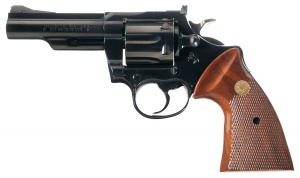
Gun of the movie: When Buford starts carrying a gun, he carries a Colt Trooper Mk III .357 magnum revolver. 


Friday, May 17, 2024

The Cursed


There have not been many, if any great gothic werewolf films since the days of Hammer Horror and Universal before that. There have been some great gothic vampire films, but the good werewolf films normally have a more modern setting. Sure, there have been some subpar attempts at gothic werewolf movies. The remake of THE WOLFMAN being an example. THE CURSED is a period piece horror film, with some folk horror incorporated, with a different spin on the werewolf mythos. The film is well crafted, especially in its period piece aspects such as the costuming and production design. What I enjoyed most was the sociocultural ambiguity that lycanthropy exhibits in this film. In some ways being just as much of a body-horror film as a werewolf film. The werewolf is treated as a disease or an infection rather than a monster. I liked that interpretation. There is plenty of creature effects work and practical gore effects to go along with that. All of that being said, the pacing in this film is a little sluggish at times. 

Synopsis: In rural 19th-century France, a mysterious, possibly supernatural menace threatens a small village. John McBride, a pathologist, comes to town to investigate the danger - and exercise some of his own demons in the process. 

The WW1 opening was a pleasant surprise. I knew nothing about this film going in. I thought for a minute that we might be getting a WW1 horror movie. The transition to 1880s rural France was not disappointing, however. In a way that made me curious as to what happened in the opening, who those people were in the past and how did the events that befell them in the future actually happen. The folk horror aspect of this film comes courtesy of the Romani people who have a stake in the land that Seamus Laurent (Alistair Petrie) owns. Like any movie that is criticizing intolerance and colonialism, Laurent has his people slaughter the Romani people and burns their homes. The Gypsy Woman (Pascale Becouze) vows to curse Laurent and his people before her and her brother are killed. They bury dentures with silver teeth. 

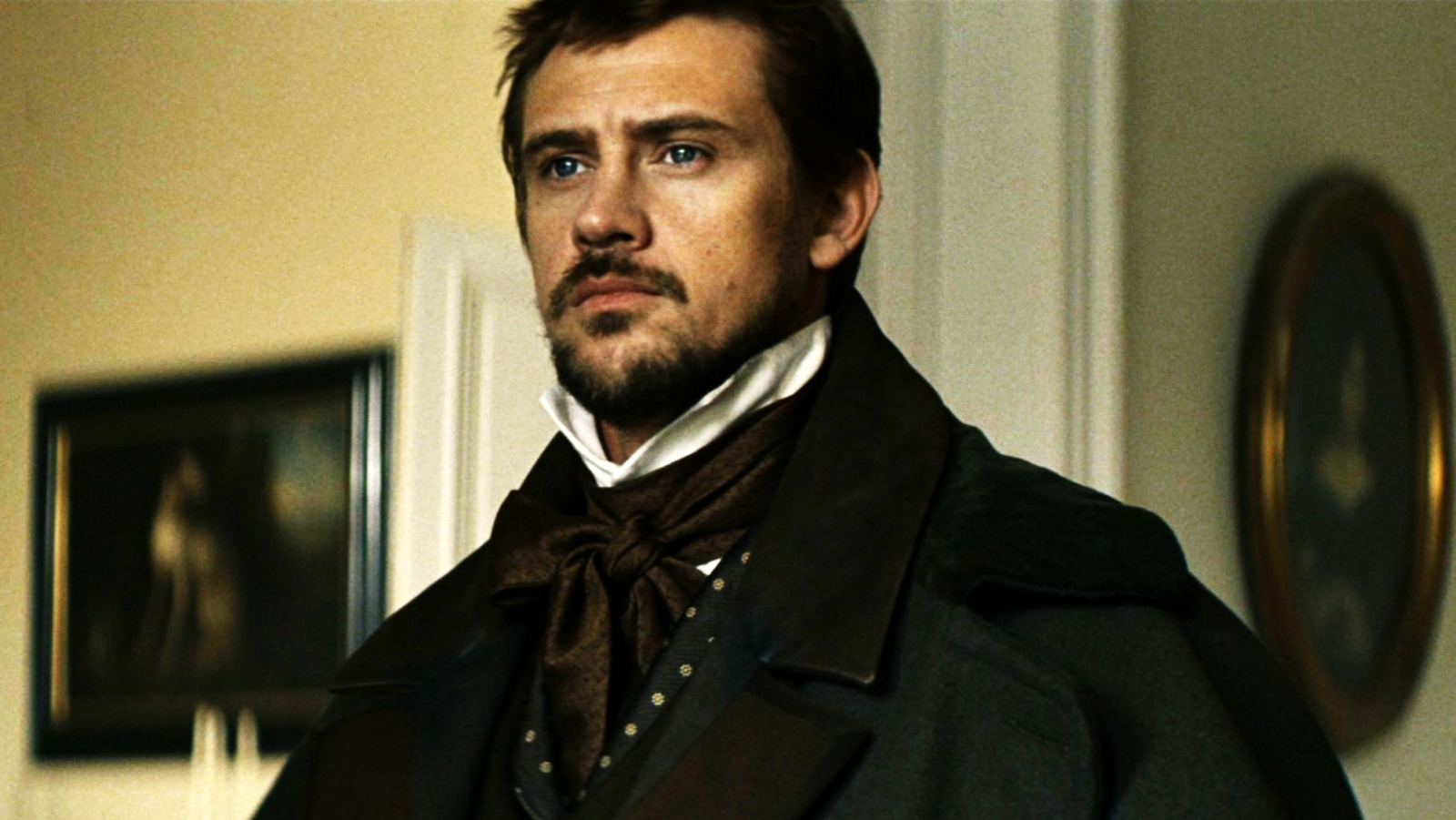
The townspeople start having nightmares about the Gypsy woman and some of them feel supernaturally drawn to the silver teeth. The Laurent family, Seamus, his wife Isabelle (Kelly Reilly), his son Edward (Max Mackintosh), and his daughter Charlotte (Amelia Crouch). This is all happening as the new pathologist, John McBride (Boyd Holbrook) arrives in town. McBride also hints at having a past with Gypsy (Romani) curses. There are some interesting things going on after the massacre sequence. The haunting moment from the sequence itself is the end when the Gypsy Woman's brother is literally turned into a scarecrow. The whole sequence is filmed in a beautiful, wide, long shot so you can see the entirety of the slaughter. 

When the nightmares start happening that is when the social commentary starts in a way. The kids in this film are similar to those in A NIGHTMARE ON ELM STREET. They cannot help the sins of their parents. They are cursed to a horrible fate because of it. Yet I couldn't help but think, especially with the way the werewolves are depicted later that there is a degree of post-colonial criticism here. Every single historical power, be it England, France, America slaughtered and destroyed the homes of different native civilizations or those having a claim to land. I do wonder how much this film is pointing the finger at kids not being educated about such things and being doomed to repeat the same wrongdoings. Or, just don't do the wrong thing in the first place and you won't be punished. Timmy (Tommy Rodger), the first kid to put on the wolf teeth and bite Edward, is drawn to the power of the fangs. Sometimes privileged kids like Timmy, don't know their own power in such a society. I could just be reading too much into this but this film indulged these thoughts in me. It seems as though the filmmakers are trying to put modern socio political ideas and culture into a period piece film. 

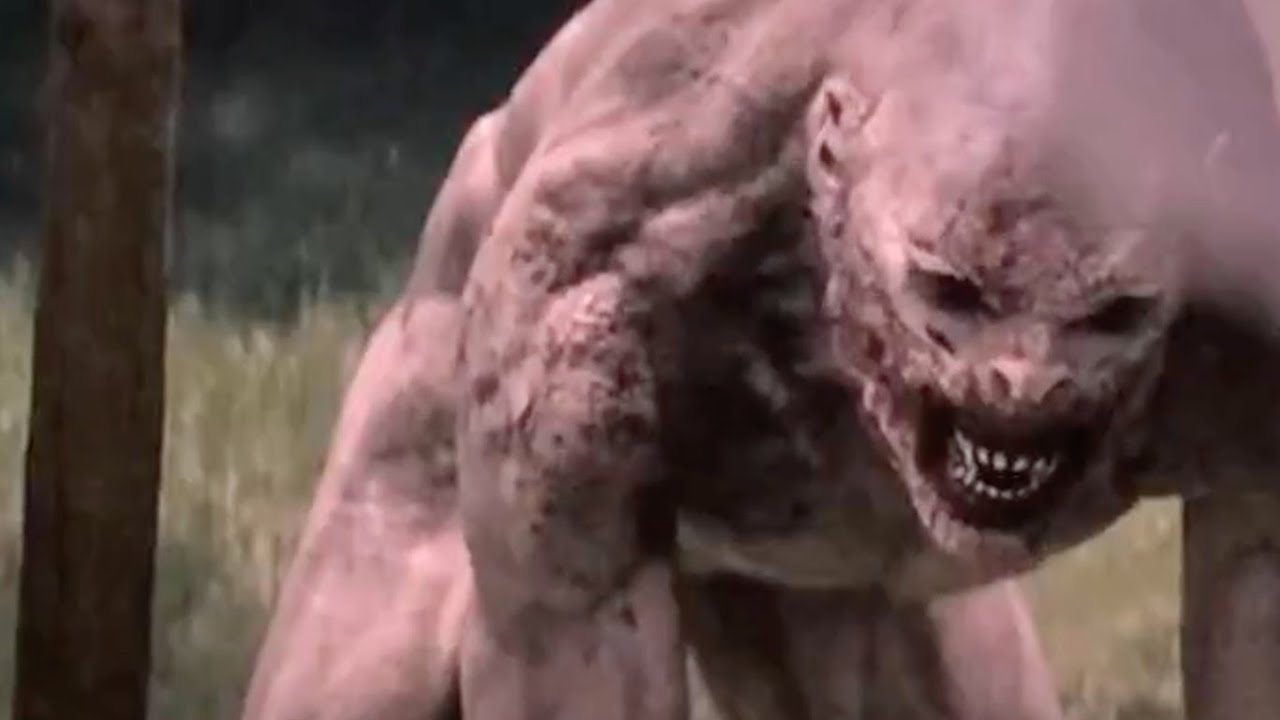
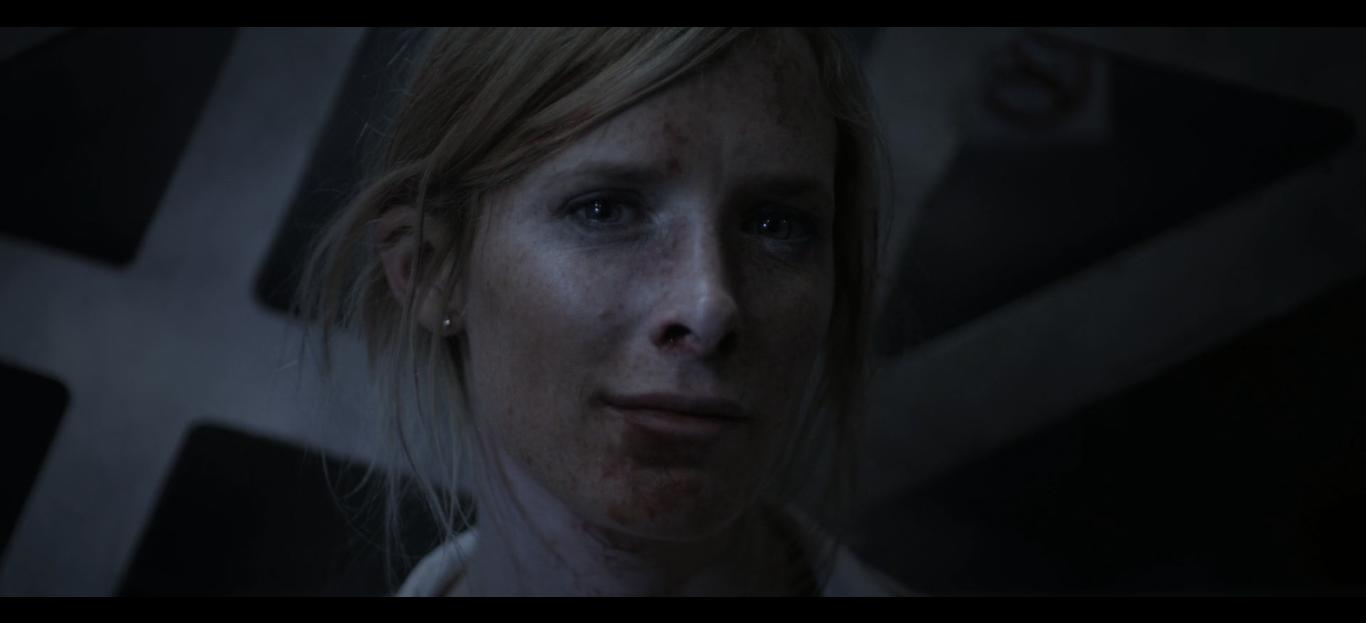
Edward quickly turns into a creature after being infected and unlike most werewolf transformations this monster truly is a beast. Rivaling transformations of Lovecraftian creatures in films like Alien, or John Carpenter's The Thing. Great gore is seen throughout. First off the scarecrow scene, an axe is used to sever all limbs on someone. Timmy's body, seen later all slashed up, looks amazing. Later there is an autopsy scene, similar to THE THING where the creature mutates further into human form with some amazing effects. Edward proceeds to bite and kill Timmy and later preys on a family, transforming more into werewolves.


A look at one of the beastly werewolves in the film


What slowed this film down for me was some of the talky scenes and the characters not being great. The characters here are good though, they just don't get to the point of really being memorable. This is one of Boyd Holbrook's best performances in anything. He gives off the energy of a classic Hammer horror lead here. I like Kelly Reilly in anything. I just thought some of the scenes of people just sitting around talking slowed the film down. Seamus talked to all the townspeople both before and after the slaughter. The arguments between Seamus and John as Seamus refuses to believe the supernatural goings on becomes a little repetitive. 


SPOILER SECTION


As much as I've ragged on the characters a bit I still enjoyed the werewolf action in this film. The creatures looked amazing. I could have used a little less shaky cam in the attack scenes. One of the few technological elements of this film I didn't love. McBride does become a great werewolf hunter, first taking the initiative to get the rifle, then setting a spike-in-the-ground trap for one of the werewolves, killing one of them with said trap. Later he melts the dentures into silver bullets. It is eventually revealed another Gypsy cursed wolf killed 13 people in his village including his wife and daughter. 


Boyd Holbrook, an actor I've been on the fence about, was really enjoyable in this film as John McBride


The werewolves in this film, assimilate their victims, similar to THE THING. Once again to the allegories. I think this film rather than being a metaphor for addiction, like many werewolf films this, one is about being trapped in society. The modern world is so driven by technology, that it is inescapable. It was invented by generations before the kids that use it. Just like the curse and who is responsible for it in this movie. Like Scott Cooper's films, a lot of themes are either too cliche or too ambiguous. The characters are likable, well performed, but they don't transcend the film. The criticism of rich white men killing someone less fortunate with a stake on their land has been done before. I don't know how much of my reading of the film is what they were going for but it was interesting to think about. I enjoyed the creature and gore effects. That final attack scene on the church was awesome. Once again though, the mother sacrificing herself for her kid has been done before. I enjoyed many technological aspects of this film along with the creature design and gore effects to help get through the shortcomings of the thematic elements. 

Rating: 7.5/10

Trivia: Sean Ellis has said he took inspiration from the story THE BEAST OF GEVAUDIN for this film. Boyd Holbrook convinced Sean Ellis he could do a British accent for this film. 


Sunday, May 12, 2024

Late Phases


A stupendous blend of what I'd want in a werewolf movie. The effects are great and the gore is plentiful. That is courtesy of Robert Kurtzman. One of my favorite aspects of some werewolf movies however, is a mystery factor. The story of this film works for me in both ways in terms of character and mystery. Having a werewolf film be merged with the old veteran living in a retirement community blends well with a werewolf film. SILVER BULLET, my favorite werewolf film, has a great mystery of trying to find out which person the werewolf is. That is central to the plot of this film. Nick Damici, a screenwriter taking a turn at acting in this film is tremendous. This is a role you could easily have seen Charles Bronson playing back in the day and Damici nails the tough old man character. 

Synopsis: A secluded retirement community is plagued by mysterious and deadly attacks until a grizzled war veteran moves in, rallies the residents, and discovers a beast is behind the killings. 

The film establishes early on that Ambrose (Nick Damici) does not have a good relationship with his son Will (Ethan Embry). Will is also blind, he has a seeing eye dog named Shadow, a German Shepherd. It is also established early on that Will is a veteran and has a cantankerous manner. Many of the women in his retirement community find his attitude unpleasant. I was happy to see actresses like Rutanya Alda, Caitlin O'Heaney, Tina Louise, and Karen Lynn Gorney playing some of the older women in this film. 


I was delighted to see Caitlin O'Heaney in this film playing Anne. She played the final girl in HE KNOWS YOU'RE ALONE.


Ambrose makes friends with his neighbor Delores (Karen Lynn Gorney) upon arriving at his new home. One night Delores is attacked by a creature and disemboweled. Shadow then fights with the creature and is mortally wounded. Ambrose gets to his gun but is never able to fire a shot after the creature breaks through his window. The police chalk this up to a random animal attack, Ambrose however has something else in mind. Something I like is that Ambrose immediately thinks this is a werewolf with no questions asked. The police talk to him about how they get calls there once a month, and the community is on the edge of town near the woods. Anne (Erin Cummings), Will's fiance also says it was a full moon that night. Another thing I like about that first werewolf attack scene is the characterization and cinematography. The film makes you feel sympathy for Delores as she talks on the phone with her daughter, Victoria. Victoria cancels one of the meet ups, it is implied this has happened more than once. You see the werewolf in the shadows and eventually it starts trying to break in. In the fight with Shadow, that scene is also shot in the shadows a lot, though you do get to see the wolf a little bit early on. 

A look at the werewolves you can see in this film


Ambrose starts investigating the community. He remembers the werewolf's wheeze and suspects a few different people. Gloria's (Rutanya Alda) husband has an iron lung, and the local priest Father Roger (Tom Noonan) smokes a lot. James Griffin (Lance Guest), a friend of the priest, has asthma. I like this aspect to the film because it encompasses much of the next hour or so. Ambrose starts timing his steps around the house to get ready for another attack. The film is helped by dramatic scenes that reveal Ambrose's past. He had to kill a young boy in the Vietnam War who had grenades strapped to his chest. The injuries Ambrose sustained in the war lead to his eventual blindness. He does talk to Father Roger about how during that time he changed as a man, resulting in his strained relationship with Will. The talks that Father Roger and Ambrose have are some of the best moments in the film as Damici and Noonan work really well together. Ambrose also wants to get a headstone to bury Shadow; he has kept Shadow's body out in the meantime, in the month leading up to the full moon. The smell annoys his neighbors and the local police who begin to worry about Ambrose's safety. 


The always creepy yet affable Tom Noonan as Father Roger


SPOILER SECTION


Ambrose eventually goes to get silver bullets made at a gun store. During this time he figures out the mystery. James had also gotten a silver bullet made. James is still wounded from the attacks at the hands of Shadow. James had been bitten by the last werewolf right before he killed it. The night of the full moon he goes around attacking members of the community and turning many of them into werewolves. Ambrose leaves a message for Will apologizing to him and telling him good luck with his wife and kid, as Anne is pregnant. Ambrose eventually puts in hearing aids to help him use his sense of hearing against the werewolves. He uses his rifle to kill one of them, he kills two with his revolver, and one with his shotgun. He eventually fights James outside of his house and kills him with a shovel. He eventually succumbs to his wounds, and it is revealed he died of an overdose from his medication which will prevent him from turning fully into a werewolf. Will finds him and we see Will firing off Ambrose's rifle at his funeral as the film ends. 

Great mystery, interesting characters and dialogue, especially in the scenes between Damici and Noonan. Great werewolf makeup effects and gore effects, courtesy of Robert Kurtzman. Combine that with some levity, mostly in the script but also due to Damici's performance. Him using a shovel as a cane is funny. Him almost turning off Gloria's husband's iron lung is hilarious. You almost wonder if he did that intentionally or not. All the supporting cast, especially Noonan, Guest, and Embry add more credibility and gravitas to their parts. This is my favorite werewolf film since Dog Soldiers. 

Rating: 9/10

Trivia: As Ambrose states at one point in the film it is in fact legal for blind people to own guns in the United States. Disabled Americans have rights to the second amendment. 


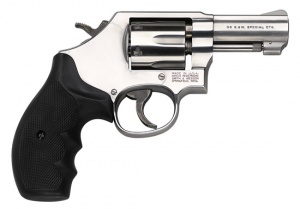
Gun of the movie: The revolver Ambrose uses is a Smith and Wesson Model 64 revolver chambered in .38 special. https://www.imfdb.org/wiki/Late_Phases


Sunday, May 5, 2024

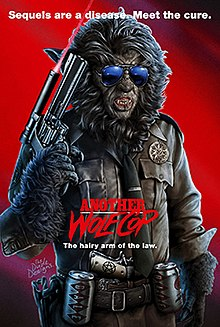
Another Wolfcop


How you feel about both WOLFCOP films will probably be determined by your view on horror-comedy in general. Another factor will be how you feel about going big or going home style of comedy. The comedy in this film is far from subtle. That is why most of it misses for me. The effects however, and the filmmaking craft are decent. The first WOLFCOP film is slightly better to me, and slightly more of a horror movie. In the first film, the whole lycanthropy and body horror concept was there. This sequel follows along the lines of HAPPY DEATH DAY TO 2U, where there is less horror because the concept has all ready been done. Blend together a werewolf film, a Troma film, specifically a Troma sequel, with a dash of an Astron-6 film and this is what you get. 

Synopsis: Alcoholic werewolf cop Lou Garou springs into action when an eccentric businessman with evil intentions seduces Woodhaven's residents with a new brewery and hockey team. 

In typical sequel fashion the film wastes no time showing off the Wolfcop's killing abilities. He takes on a few men in a getaway truck ripping them apart. The filmmaking craft is great here, and throughout the whole movie. There is great use of dark red and green lighting, similar to the lighting in a Joe Begos film. The Wolfcop has become a cult celebrity in the town of Woodhaven, so much so that stores are selling merch of him. Tina Walsh (Amy Matysio), the local sheriff, is annoyed with the Wolfcop for not being more subtle and for eating too many donuts. 

Leo Fafard returns as Lou Garou/The Wolfcop in this film


The Troma aspect of this film comes in the form of entrepreneur, Sydney Swallows (Yannick Bisson) who wants to build a new hockey stadium and sell a new beer there. Of course there are ulterior motives to this. Very much out of a Troma film where the alien life form wants to use alcohol to create mutants. Kevin Smith showing up as the Mayor only adds to the Troma feel. The Astorn-6 aspect of this film is in the costuming and tone. This feels like superhero a movie at times merged with a horror film. The Wolfcop costume is like something out of POWER RANGERS. The superhero feel is made more prevalent by Frank, a cybernetic supervillain made by Swallows who has a big fight with the Wolfcop at the local strip club. Also, an aspect I enjoyed was the "moon meth" that gives the Wolfcop increased strength. Willie's sister, Kat (Sara Higgins) has a rock from the moon that is continually used to help the Wolfcop heal and gives him increased strength. 


Kevin Smith shows up uncredited in this film playing Woodhaven Mayor: Bubba Rich


The biggest aspect of this film that lets me down is the comedy. Some of the comedy is a bit too big for me. For example there is a werewolf/she-wolf sex scene in this movie. That completely misses for me. The alien mutant babies that people get when drinking the "chicken milk stout" again was too over the top for me. The effects work was more plastic than gory. Most films that have these kinds of mutation effects don't work for me though. It does work with Kuato in TOTAL RECALL, but most of the time mutant babies in horror or sci-fi movies don't work for me. There are some funny moments that made me chuckle though. When Lou and Willie (Jonathan Cherry) meet again for the first time, after Willie awakens from his coma they both scream at each other. For the most part I found Willie's mutant baby to be annoying, but Willie is trying to keep it hidden. In one scene at a bar the mutant keeps saying it wants beer and Willie is trying to keep it hidden from Lou and Kat. That got me to laugh. Lou and Tina seem to have this will they or won't they aspect to their relationship. Another funny part is when Willie naively talks about Lou having sex with his sister in front of Tina. 

I will admit, the final sequence of this film was satisfying. Swallows debuts his beer with his new hockey team. Lou, Willie, Tina, and one of Tina's deputies, Daisy (Devery Jacobs) fight against Swallows, his henchwoman, Number Two (Kris "The Raven" Blackwell), as well as Swallows's hockey team. There are some fun gory moments. The Wolfcop uses hockey sticks to stab people as well as a scythe. Number Two has a fun moment where she faces off with the Wolfcop using guns mounted to a Zamboni. 

While this film is hit or miss with me, Lowell Dean uses a seven figure budget well. The Troma similarities in tone, look, and humor may work better for some than it does for me. Lowell Dean also does a great job with the cinematography and colors throughout, even though this does have the low-budget warehouse look that a lot of films do when they say they are set in big cities. I'm going to have to give his post-apocalyptic film, SUPERGRID, a try at some point. 

Rating: 5/10

Trivia: The hockey cheerleaders wear horn-rimmed glasses with masking tape on them. This could be a reference to the Hanson brothers in SLAP SHOT.

Wednesday, May 1, 2024

Howl


A werewolf movie that sinks its teeth in but doesn't quite take a whole bite. The pros for HOWL are great makeup effects, gore effects, prosthetic suit work, and werewolf design. Some great horror movies of the past have been set on trains, they provide a certain kind of atmosphere. Howl is added to the list of films that use that atmosphere well. It also feels just as much like a survival horror film at times and joins different creature features where the horror is focused on the territoriality of monsters. The film's biggest flaws are the pacing at the beginning and the characters. Scenes with just the characters early on make the film feel like it is going through the motions. None of the characters ever emerge as someone really worth remembering. The subpar characters only add to the pacing issues early on in the film. Once the wolf carnage starts, and you actually see the werewolf the film gets going.

Synopsis: When passengers on a train are attacked by a creature, they must band together in order to survive until morning. 

Early on the film establishes who some of the characters are in various ways. Joe (Ed Speelers) is a train guard who was denied promotion and gets criticized by his supervisor for not handing out enough penalties. After his shift he is asked to go on another run by his supervisor. His only real reason for accepting the job is seeing his crush, the tea-trolley girl, Ellen (Holly Weston). Some of the distinctive personalities on the train are an older couple, Ged (Duncan Preston) and Jenny (Ania Marson), Nina (Rosie Day), Adrian (Elliot Cowan), Kate (Shauna MacDonald), Matthew (Amit Shah), and Billy (Sam Gittins). Historically, almost any survival horror film has characters that fit into certain archetypes. There is often always a couple, someone selfish who is out for themselves, an annoying character and one who gets scared when things start happening, one who helps the main character and has a skill that they do not have, and one who rises to the occasion. All of the various characters in this film slot into those archetypes perfectly. THE NIGHT OF THE LIVING DEAD laid out these archetypes that are usually still followed in these kinds of films. 


Shauna MacDonald as Kate in HOWL, she also starred in THE DESCENT


Eventually the train hits a deer, damaging the wheels and the fuel lines. In a wasted performance by the best actor in the film, the conductor (Sean Pertwee) goes to investigate and is killed by the werewolf. Similar to other survival horror films, the passengers want to run around outside before the werewolf eventually barricades them in, starting a siege narrative. Between some of these werewolf attacks there are moments of the characters getting to know each other. As I've said because I didn't much care for any of these characters, these attempts at dramatic sympathy feel more like filler than anything I emotionally invested in. 

Director Paul Hyett worked on the special effects for THE DESCENT. He has worked with director Neil Marshall on some of his other films as well. Whenever an FX artist directs a horror film, normally that means the FX work will be a main focus. The FX work does not disappoint in this film. Great looking leg wound on Jenny's werewolf bite, great FX work on her face and the contact lenses for various werewolves in this film. Also one great gory neck rip. Cinematographer Adam Biddle, brother of Adrian Biddle does a great job with some of the night cinematography as well as the fog machines. So the craft here is great. The substance leaves a little to be desired. The score by Paul E. Francis works well in the film and features some moving human vocals within it. 


A look at the werewolf in HOWL


Some things in the second half of the film help ratchet up the tension. Joe contacts the train dispatch, but because of a storm knocking out power and trees in the woods around them they are stranded indefinitely. Billy is able to find out a way to start the train back up. Him and Matthew eventually try to do that, while the others stay on the train. The two different scenarios help build tension. There are also a couple of dumb character decisions, that I may have been to forgive more, or at least see a little differently if I had any emotional investment in these characters. A third act development also increases the tension. One character also gets some great comeuppance leading to a satisfying ending. 

While HOWL has its flaws, mainly in how cliche some of the characters are, it still functions as a fun, tense, and well made werewolf survival film. The look of the werewolf is unique and interesting. There is a fair amount of blood and gore and great FX work. I also enjoyed the lack of the "silver bullet" being the absolute way to stop a werewolf. While this isn't quite HORROR EXPRESS in terms of a horror movie taking place on a train, or a ROGUE in terms of a territorial creature feature, this is a decent film. I could understand if someone said "this film walks so TRAIN TO BUSAN could run." 

Rating: 6.5/10

Trivia: The werewolves were played by people in prosthetic suits, with the exception of the legs which were all CGI.


Sunday, January 28, 2024

Shaft's Big Score!


While the first SHAFT was a more subtle film this goes bigger. Nothing represents that symbolic leap more than the fact that Shaft carries a shotgun as his main weapon compared to the revolver he carried in the first film. The film ends with a car chase, boat chase, and a shootout at the docks. That was a most satisfying payoff. The action far exceeds anything from the from the first film. What doesn't work as well however is the private eye mystery element and snappy dialogue that Shaft had in the first film. In this film it feels like trouble finds him, while in the first one it felt like found trouble through the investigation. There are moments of great dialogue but not nearly as many great lines compared to the first one. 

Synopsis: When Shaft finds out that a dead friend ran a numbers racket out of his legitimate business and left $250,000 unaccounted for, he knows why he has suddenly found himself in the middle of a war between rival thugs. These goons are all trying to take over the territory of the dead man as well as get their hands on the missing 250 grand. Shaft has all he can handle trying to track down the money and, at the same time, keep his friend's sister from the clutches of the hoods.

The film starts with someone emptying a safe. That person in turn calls Shaft. As Shaft arrives to meet him the building blows up. The man in question was Cal Asby, an insurance salesman and mortician. Shaft is questioned by Captain Bollin (Julius Harris) but cannot be held due to lack of evidence. The plot in this is convoluted because there are a lot of sides to it. Kelly (Wally Taylor) was in business with Asby and they were running a racket with their funeral parlor and insurance company. Kelly owes $250,000 to mafioso, Gus Mascola (Joseph Mascolo). Later it is revealed that Kelly had wanted to steal that money from Asby's safe and blew him up thinking the money would still be there. Many different sides get involved, including "Bumpy" Jonas (Moses Gunn) and his bodyguard Willy (Drew Bundini Brown) from the first movie. 

Shaft eventually figures out that Asby was a good citizen wanting to use his money for philanthropy. He had planned to buy out Kelly. Kelly got greedy and wanted to use that money to pay his debts and killed Asby to take over the numbers racket. There are many different double crosses along the way. Kelly goes to Mascola and they agree on a 50-50 split. Kelly then later goes to Jonas and offers him a stake in the racket in Queens and a 60-40 partnership. Kelly also asked Mascola to kill Shaft. Mascola sends two men after Shaft, and Shaft kills them both. Shaft later goes to a club and is beaten up by three men who tell him to deliver a message to Bumpy to stay in Harlem. This is only after Kelly lies to Mascola about Shaft being sent there by Bumpy. So Kelly is a really sleazy character and will do anything to save himself. 

There are many things I enjoyed about this movie. Shaft's cool lines aren't in supply as much as the first one. We first see him sleeping with Asby's sister Arna, as Asby calls him. He asks Shaft to protect his sister and he says "I can get a hand on her," as he literally puts his hand on her ass. Later he goes to Kelly's place and encounters his beautiful girlfriend, Rita (Kathy Imrie). They have fun banter that eventually leads to a sex scene where the scene is shot through the distorted glass of a vanity mirror. Like the first film Gordon Parks shows a penchant for filmmaking with the different crossfades between the vanity mirror and back to Shaft and Rita. While Isaac Hayes still did the opening song, the score is less soul than the first one. Parks did the music himself and it is much more traditionally orchestral. There is some fun buddy-cop type of humor when Shaft and Willy have to team up and they go to Mascola's place. Willy just stands there watching Shaft and Mascola fight while Shaft asks Willy for help.


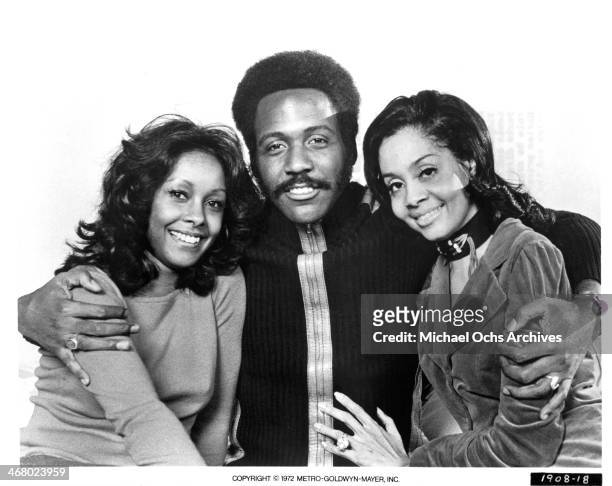
Left to Right: Kathy Imrie (Rita) Richard Roundtree (Shaft) and Rosalind Miles (Arna)


SPOILER SECTION


All sides converge on each other at a cemetery. Kelly finds the money buried there. He gets it, but Mascola shows up and kills him. Shaft meanwhile shows up just behind them and takes the money and Mascola hostage. A long chase ensues, first with cars, then to a speedboat and then on land. Shaft manages to take out all of Mascola's men. He shoots down the helicopter and shoots the other men on the ground near some shipping docks. Once again Parks shows his craftsmanship with the wide shots of the stairs leading to a crane where Shaft is being chased by one of the men. Shaft refuses to tell the police where the money is and says he will be donating it to a child care organization, something Asby had intended to do with it. 

While the subtleties of the first Shaft are not in this, the movie succeeds as a sequel. Much more action, a bigger scope, more blood squibs, and still some fun lines that make Richard Roundtree so awesome as Shaft. The final chase sequence rivals any chase sequence in the era where many movies always had one. It was fun seeing some more staple Blaxploitation actors like Julius Harris. 

Rating: 8/10

Trivia: Director Gordon Parks has a cameo as a croupier in the back of the gambling room at Mother Ike's. 


Gun of the Movie: Shaft's shotgun the High Standard Model 10 (HS-10)


Saturday, January 20, 2024

Shaft (1971)


SHAFT has a great combination of ingredients that lead to a most satisfying movie. A combination of snappy lines and dialogue combined with the private eye mystery being well written. The movie shows some and tells even less. You never feel ahead or behind Shaft's investigation. There are gunfights where you don't see the gunman and it plays more like a suspense scene and it works. There are shootouts with the 1970s stylized violence that I love so much. The most fundamental thing that makes it great is Richard Roundtree in the title role. His acting is great both from the physical and emotional standpoint. You believe him as a tough guy, as an investigator, and as the lady's man. Isaac Hayes adds more greatness to the score with his vocals and the title song that perfectly encapsulates the main character. 

Synopsis: John Shaft is the ultimate in suave Black detectives. He first finds himself up against Bumpy, the leader of the Black crime mob, then against Black nationals, and finally working with both against the White Mafia who are trying to blackmail Bumpy by kidnapping his daughter.

The film starts with some great location shooting around New York City. Nothing beats the late 60s and early 70s New York look with the different lights and restaurant logos among other views. Isaac Hayes "Theme from Shaft" kicks in and we know how cool he is supposed to be. "Who's the black private dick that's a sex machine to all the chicks? (SHAFT!) "You're damn right!" The bird's eye shots of Shaft cut back to the medium shots of his profile. Gordon Parks shows his penchant for direction in those shots. The breath you see coming from people's mouths indicates this is winter in New York City.


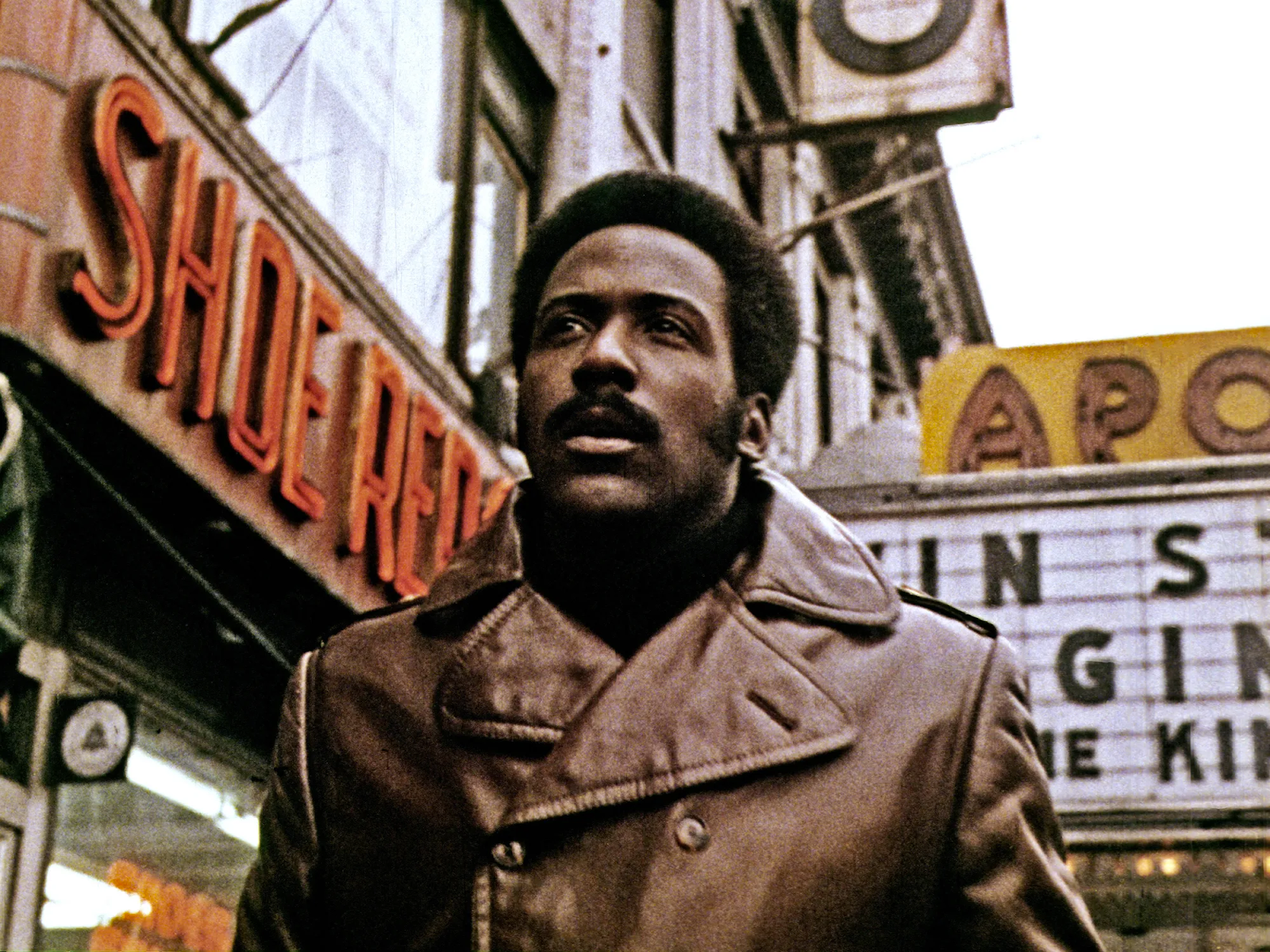
Richard Roundtree as John Shaft


Early on Shaft has a number of moments and lines to establish how cool he is. His cop friend Androzzi, (Charles Cioffi) and his assistant come up to talk to Shaft early on and they have a memorable exchange. "Where the hell are are you going Shaft?" "To get laid. Where the hell are you going?" Shaft shows his Detective skills early on where he notices one man in the building where his office is looking for him. He takes the other man up to the office where he engages two men in a fight, throwing one of them out the window to his death. Androzzi eventually interrogates him about this confrontation and they have a memorable exchange. Androzzi and him get into a debate about race where Androzzi holds up a black pen saying to Shaft "You ain't so black." Shaft then holds up a white coffee mug and says "you ain't so white either." 

Eventually Shaft discovers that "Bumpy" Jonas (Moses Gunn), a Harlem crime boss, sent his men to Shaft's apartment for a meeting. Bumpy requests that Shaft find his daughter who has been kidnapped by rival Mafiosos in the city. What I like about this plot is that it shows the limitations of a big time gangster. Bumpy needs Shaft because his influence and his sway over cops he can buy doesn't extend out of Harlem. Shaft doesn't like the idea of working for a criminal but also gets payment out of it. Bumpy tells Shaft to find Ben Buford, a black militant leader. 

What ensues throughout the rest of the movie is some great shootouts, mystery reveals and payoffs, and fist pump moments from Shaft. There is a great shootout when he tracks down Buford where no gunman is revealed, you just see bodies getting shot and blood squibs. Shaft and Buford's escape from a building is just as much suspense as it is action. Shaft eventually figures out Mafiosos are watching his apartment from a local bar. He disguises himself as a bartender and eventually busts open one of the men's heads with a bottle. That was a surprising moment that had the blood and violence aesthetic I love so much from 70s movies. Shaft uses the two men for information and sets up a meeting between him and the men who are holding Bumpy's daughter Marcy, hostage. 


Spoiler Section


Shaft goes to a cafe where he has a memorable interaction with a waitress. He asks for an espresso and she asks if he wants a sandwich and he says no. She later comes back and asks if he wants her to bring him a lemon peel. Those little moments are moments that feel natural that makes me like this movie more. Shaft eventually finds Marcy but gets shot in the process of trying to save her. One of the kidnappers leaves Shaft alive and tells him to deliver a message to Bumpy: 24 hours to deliver or Marcy dies. Buford and company save Shaft and a doctor operates on him.  Eventually Shaft and Buford's men find out where Marcy is being held and launch an attack on the building. What is great is how coordinated this attack is. Shaft repels down a window and breaks in while inside the building Buford and his men position themselves along the doors to take out the other men. all of them succeed in killing the Mafiosos and saving Marcy. One of them has a fire hose to hold off others, if that isn't poetic justice for the Civil Rights area I don't know what is. 

There are many things I love from this movie but the combination of Richard Roundtree being a perfectly cool character with some pathos is a great foundation. The mystery being something you figure out as an audience with the character is great. The 70s aesthetic and filmmaking with the violence is great. It has some sociocultural commentary but it never feels over the top. In 1971 I imagine it was progressive to show a white woman being into Shaft, and more specifically showing they had sex on screen. I enjoyed seeing actors I've seen in other things. Cult movie legend Tony King and Blaxploitation mainstay Tony King being the big ones I've seen in other things. 

Christopher St. John as Buford (Left) and Tony King as Davies (Middle)


Rating: 10/10

Trivia: Isaac Hayes was the first African-American to win the Academy Award for best original song. He also auditioned for the role of Shaft. Producers were impressed with him enough to hire him for the score.


Gun of the movie: Shaft carries two different Colt Detective Specials throughout the film. One that is nickel plated that he keeps in his fridge is my favorite. 


The Big Doll House

  A smorgasbord of exploitation and sexploitation, THE BIG DOLL HOUSE is a fun women-in-prison movie. While there is enough violence, tortur...