Friday, May 26, 2023

Straw Dogs


A movie that depicts men as inherently violent but also answers what pushes them to that point. David has many things happen to him throughout this film but it is not until his property is threatened that he responds with violence. That is in combo with defending an intellectually disabled person who did kill a young woman. What Sam Peckinpah is showing is how violence in a lot of ways is random but there are always consequences for it. The whole movie is one build up from a man avoiding confrontation to being so calm when it does happen at the end. Yet what he is defending isn't anything more important than what he avoided for the rest of the film. Contrastingly, Peckinpah in combination with his editors shows men's violent nature in different ways. David goes to hunt quail while the same people who have been belittling him and his wife the whole movie go and rape his wife. What is interesting about the after of the rape sequence is that it has no bearing on David. The other storyline of the film follows his younger wife falling less in love with him for paying her no attention and showing her being attracted to someone who does, albeit in a way that would never be approved by modern viewers. That being said, everyone fails in this movie to protect something they value and it leads to the confrontation at end. It feels like this movie shows the inevitability of confrontation and violence no matter how much you avoid it or run from it. 

Synopsis: David Sumner (Dustin Hoffman), a mild-mannered academic from the United States, marries Amy (Susan George), an Englishwoman. In order to escape a hectic stateside lifestyle, David and his wife relocate to the small town in rural Cornwall where Amy was raised. There, David is ostracized by the brutish men of the village, including Amy's old flame, Charlie (Del Henney). Eventually the taunts escalate, and two of the locals rape Amy. This sexual assault awakes a shockingly violent side of David.

The problem with almost any synopsis or description with this film you will find is that it makes it seem like a rape and revenge movie. That is far from the truth as you find out throughout the film David seems like the type of man to blame his wife for being raped or the type to not be capable of doing anything about it. He never even finds out about the rape though his wife hints at it to him. This takes place in a rural British village in the early 1970s. Amy coming through the downtown area with a white shirt and no bra is almost like introducing this village to the modern world. A world that at a time without any modern technology was basically like a prehistoric, almost western town, as the rest of the world was changing. You had people traveling in planes and on the phones in other places, but here it is like people who never leave a town in their lives. It is said that David left the American college system because he didn't like the way the world was changing. Things like protests and maybe even the women's rights movement being things he would seem to disagree with. Yet he marries a product of that. 

David's relationship with his wife is a little like how someone might treat their pet. He just wants to sit in his office all day and write on his blackboard. He got a land grant to go that house and complete his studies. At first Amy is all gung-ho to tell people like her ex-boyfriend Charlie Venner about David's job and what he is doing. Yet as the movie goes on she finds more value in the attention she gets from Charlie and the people fixing their garage than she does from David. David shows some affection for her, but only at night when he has been studying and neglecting her for hours. They have some cute moments such as her annoyingly, but also jokingly chewing her gum in front of him to which he playfully calls her a child. They also have a moment in bed where David gets her under the covers under the guise of looking for a chess piece yet we know what he really wants to find. Yet at other times he passive aggressive insults her intelligence calling her "not so dumb," when he says what binary numbers are. The comparisons to treating her like a pet are apt. 

Enter Charlie and some of the other townspeople fixing their garage. Scutt and Chris were hired first and instead of firing them like he says he will at one point David just hires Charlie to help them. They all ogle Amy one morning when she gets home from town. Starting at her skirt rising up as she gets out of the car. She complains to David that "they were practically licking my body." Instead of sticking up for her, or even defending her, he jokes saying "I compliment them on their taste." He also blames her and says you can't blame them for staring if you don't wear a bra. The first of many things that would be considered victim blaming by a modern audience. Amy proceeds to go even further by going topless near the window that leads to the shower while all the men stare at her. More on this later.

The insults go further and eventually David finds Amy's dead cat, notably a cat David finds annoying, hanging in the closet. Amy wants David to confront Charlie and the others about this but instead just has them come inside the house and move a giant mantrap. I'm not sure whether or not he was ever going to go through with the confrontation but definitely decides against it when Amy comes in with the milk to give to her cat while she gives all the men beers. The men invite David to go hunting with them which he does accept. At this point Amy leaves a note on his board saying, "did I catch you off guard?" Something David had said to her that he planned to catch the other men off guard. This is not the only time David doesn't respond to some instigating Amy does. Earlier she put a subtraction sign on his board instead of an addition sign and put gum on the blackboard even when he told her not to do it. Amy acts a bit like a child wanting attention but once again David does nothing and can't even give her any negative reinforcement. The way she treats him is a microcosm of how the others do. 

As David goes hunting, the others all leave him be and Charlie, and later Scutt rape Amy. Charlie comes to the door, Amy lets him in and he forces himself on her at first just kissing her. She asks him to leave but he does not and then starts slapping her around and eventually gets her on the couch and takes her clothes off. After a certain amount of time Amy's fighting grunts become moans and she starts caressing Charlie in a way that shows she submits to him. What happens next however is Scutt coming in and pressuring Charlie at gunpoint and gesturing for him to move away from Amy. He does so but also holds Amy down while Scutt rapes her, Amy showing she is certainly not comfortable with this by screaming. This is intercut with David shooting at quail and eventually hitting one and walking home as the others have stranded him. When he gets home Amy is in bed and she calls him and herself a coward. The next night in my favorite sequence of the movie, David and Amy go to church where Amy keeps thinking about her rape as we see in cuts. This is only made more uncomfortable by the cacophonous noise of the children's party favors before a magic show. I like this scene because of the editing with the cuts to images from Amy's mind but also the look of distress on Susan George and the cutting to the children, symbolizing both their innocence and Amy's loss of but also the noise probably not making her feel any better and more overwhelmed. It almost feels like a nightmare that you is happening and the rape has happened. Not many movies show how a woman would feel right after this event. Far be it for me to be able to speak on the subject but I think a lot of movies turn it into trauma leading to revenge. This shows how Amy is just uncomfortable and feels sick. 


Spoiler Section


David and Amy leave as Amy feels uncomfortable. While driving they hit Henry Niles, an intellectually disabled person with a history at the asylum. It is never said why he was committed but it is implied that he was a child predator of sorts. One of the men tells Tom Hedden, the town drunk, and Charlie's Uncle that Janice, Tom's young daughter, was seen leaving the church with Henry. Henry had accidentally choked Janice to death while men were looking for them. That scene is quite similar to Lennie accidentally killing Curley's wife in Of Mice and Men. This leads to a siege and home invasion narrative at Amy and David's house with David fighting each man when they attempt to enter his home. There are no scenes of cathartic violence really except for when David kills Chris by beating him to death with a fire poker while the bagpipe music he put on earlier plays in the background. You get some of Peckinpah's signature slow motion when Tom attempts to enter the house and Henry hits while he enters the window forcing Tom to shoot himself in the foot with his own shotgun. 

There are several interesting things that happen during this invasion. For the first time in this movie we see David comfortable, almost a little too comfortable with standing up to these men. In many ways he has an advantage. The men can't come in the front door because of how well reinforced it is. They have to come in the windows giving David a chance to defend the windows before they can come in. David had fired the men earlier after they stranded him on the hunting trip. That was his first show of confidence and getting fed up. He is so calm and collected in this situation you just wonder what his mindset was throughout the rest of the film and how it changed so suddenly. He talks about how "I will not allow violence against this house." It is interesting that throughout the film the men have shown no respect toward him but he seemed to be okay taking it. Now when it comes to his home and defending a man, a questionable man at best in Henry Niles he sees the responsibility to defend them, therefore defending himself. At one point Henry attacks Amy. You're not sure why but David stops him. David later starts slapping Amy around when she wants to give Henry to the mob. After David slaps her around a bit she becomes more submissive helping him bring the mantrap downstairs. At one point Scutt gets in upstairs. Who saves her from being assaulted again but Charlie. After that Charlie fights with David and David ends up snapping Charlie's neck in the mantrap. At this point David fights the man who drove the men to his house, Riddaway. Amy eventually shoots Riddaway. David and Niles leave with each man saying they don't know their way home.

While I don't necessarily find Straw Dogs to be the most rewatchable movie, it is a movie that I like more and more each time I watch it. That could sound contradictory, but there are many movies I have seen once that I will never watch again. The questions that this movie poses and the moments that are memorable to me are always worth watching again. I would get in trouble with modern feminists and people that are like minded for saying Amy is to blame in some ways for her fate. I never have had any problems with the way she dresses or her lack of clothing, for example not wearing a bra. What I do have a problem with is her getting topless and walking by all the men while she knows what she is doing, and they know it too. While she is trying to get attention that her husband is not giving her, she is still planting an idea in the heads of men that she is accessible. There is probably someone feminist minded screaming at me for saying that. I would compare Amy to someone who has money and holds that money out for everyone to see. Amy not wearing a bra and dressing more moderately is like someone showing or saying they have an expensive gold watch or something. Amy walking by the men is like someone flashing that gold watch in front of their faces and saying you can't steal it much like how Amy tells Charlie to leave when he makes his move on her. Can you expect many men to say no when they can easily overpower her? I wouldn't, but many people of other minds would call me a victim blamer when I am just simply saying Amy put the idea in their minds that they could do what they wanted. Other sequences like the scene in the church, and fan theories like did David actually kill the cat? The rape scene can be interpreted many ways but it warrants discussion no matter your viewpoint. As troubling as it is, if Scutt doesn't interfere you could argue that Amy and Charlie would have started an affair. Those are reasons why I love this movie and I feel like I have different interpretations of it every time. It makes you ask hard questions.

Rating: 10/10

Trivia: T.P. McKenna, who plays Major John Scott has his arm in a sling for a lot of the film. This is because of a party with some escorts where his arm was apparently harmed, an event that was arranged by Peckinpah himself.



Sunday, February 19, 2023

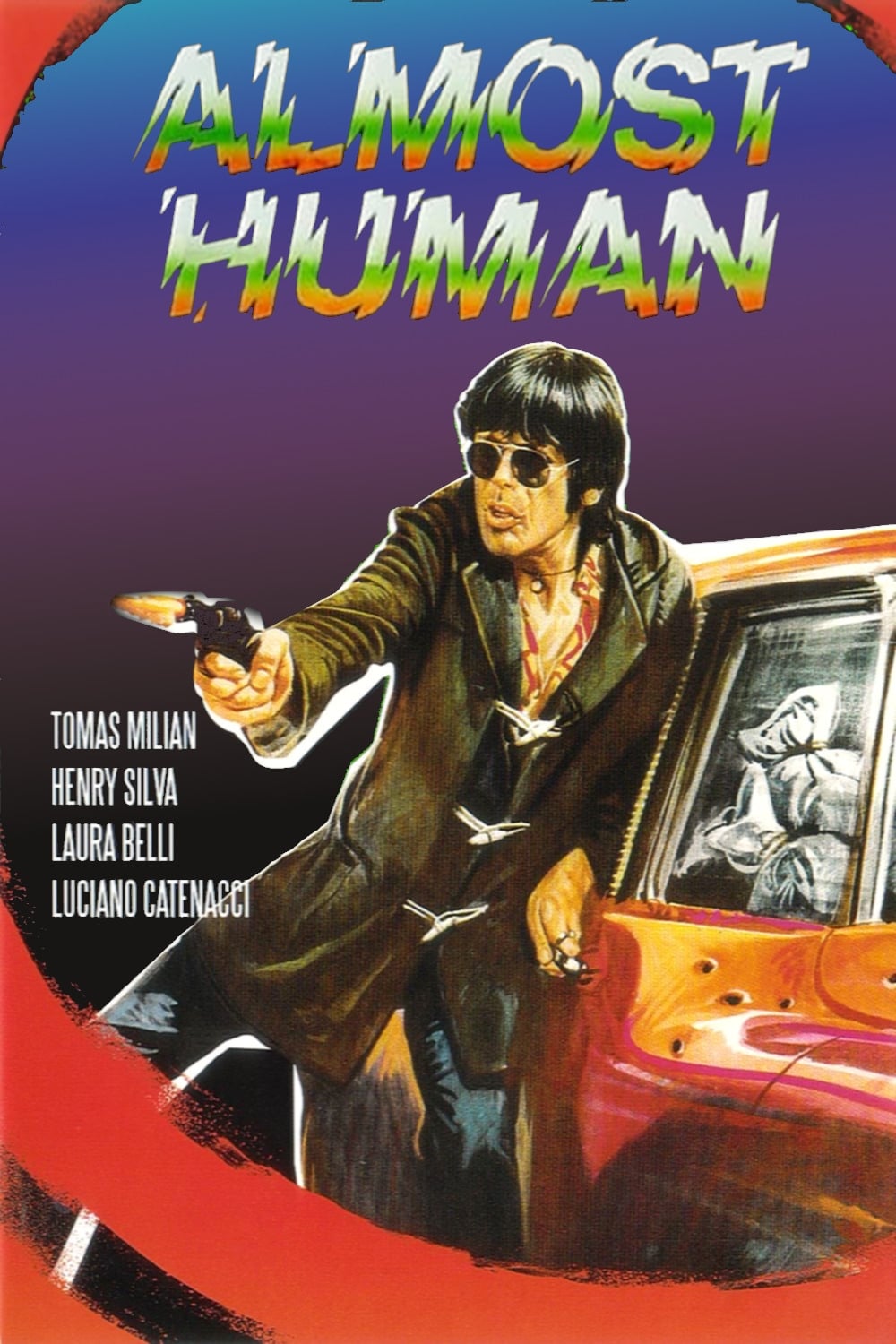
Almost Human (1974)


Featuring a truly one of a kind villain performance from Tomas Milian, Almost Human is an incredible story about someone who can get what they want at the sake of others. The movie is about a criminal getting more and more comfortable with disregard for other people and the law for their own gain. As the movie goes on it only gets worse. He goes from an unrepentant cop killer, unrepentant rapist to kidnapping, shooting people while tying them up, and killing children. Yet because of the over the top nature of it and the progression you almost feel along for the ride and are just waiting to see what crazy thing he does next. Yet in the scenes with Henry Silva as the cop the narrative flips and you see an honest cop, hard-nosed, but certainly not corrupt or dirty pushed to his breaking point. The movie forces you to feel curiosity and excitement by showing what the criminal does, but also sympathy from the view of the authority figure trying to get him. In the end you almost feel resigned to the idea that the system protects criminals and not the people they victimize. All of Lenzi's crime films are about that idea explored through different ways, but none are as exciting or visceral as this one. 

Right away Giulio's short-fuse is shown when he is the getaway driver for a robbery. He kills a cop who comes up to him and asks him to move his car. A run of the mill chase scene follows. Far from one the best in Eurocrime movies but certainly not the worst. The next scene is something that resonates throughout the entire film. Giulio (Tomas Milian) is beaten up by the gang who asked him to commit the robbery and is threatened with castration. The powerlessness and the wimpy nature of Giulio in these scenes almost makes him overcompensate later when he has power in the form of a gun or followers with him. Eventually he gets the idea of kidnapping the daughter, Mary Lou (Laura Belli) of his girlfriend, Ione's (Anita Strinderg), boss, Porrino (Guido Alberti). Giulio makes friends with Carmine (Ray Lovelock) and Vittorio (Gino Santercole) to help with the kidnapping. 


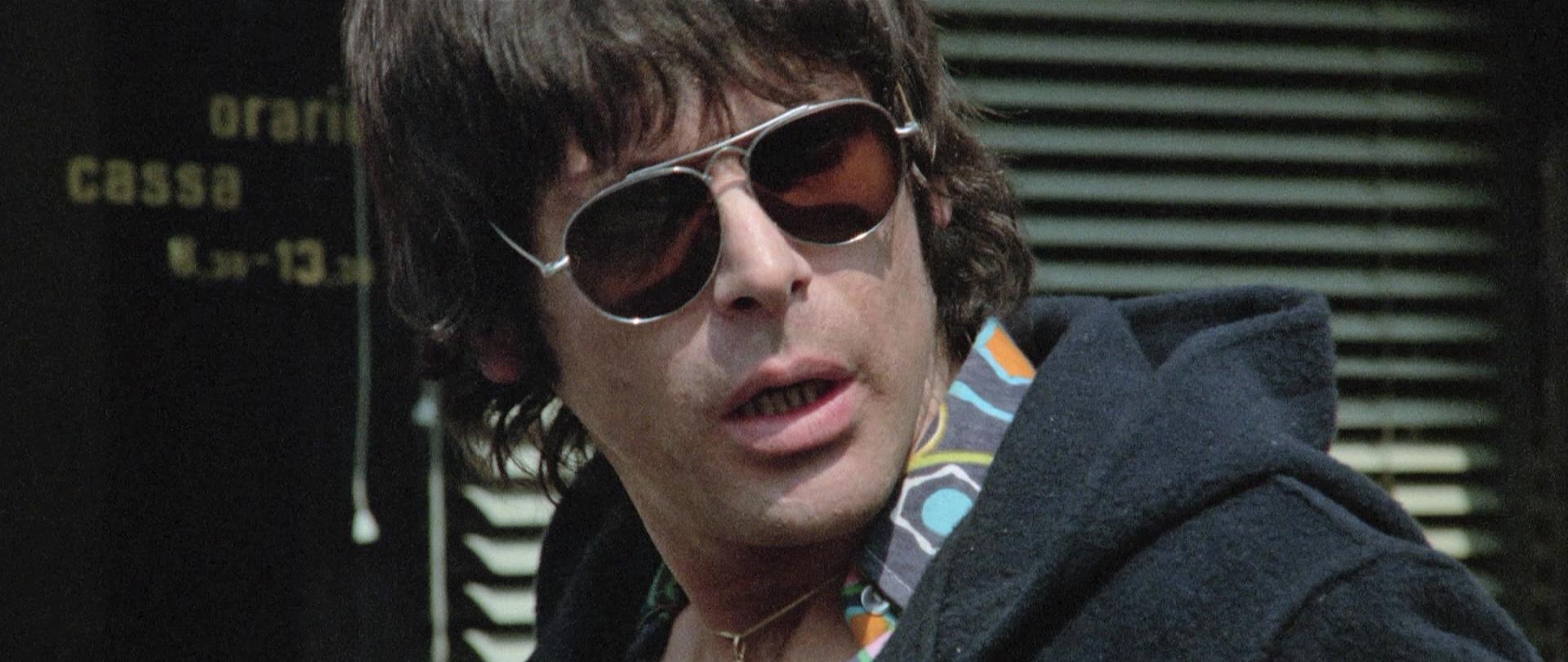
Tomas Milian as Giulio


Anita Strindberg, and her amazing jawline as Ione


Regular Eurocrime player, Ray Lovelock on the left as Carmine, Milian on the right


Regular Italian character actor, Guido Alberti as Parrino


While the film starts with Milian killing a cop at the robbery, he also kills a cop later when he is caught by a night guard trying to raid a cigarette dispenser. This gets the attention of Inspector Walter Grandi (Henry Silva) who makes mention of how the guard was killed for a small amount of money. There is an element of classism this film starts to explore. Ione tries to talk Giulio into getting a job and he talks about "spitting out your soul 8 hours a day," only to blow all your money at the hospital at some point. Now I don't know how health insurance worked in Italy then or now, or if that is just part of the english dubbing translation but that line really resonated with me as something many people now think about in America. It is true that a lot of money you earn with too much time working can be used for medical expenses. Giulio is a character so full of life regardless of the decisions he makes. You can understand why he has this mentality. The idea for the kidnapping was not only to make money to get himself in a better place where he will no longer be the guy who is belittled by all the other gangsters. He seeks money and power so that he no longer has that feeling of being emasculated or being on the bottom. That is why he starts to overcompensate when given power, but he also acts on impulse. 


Henry Silva as Inspector Walter Grandi

When Giulio kills the cop near the bank his lips are trembling because he is anxious. Later in the home invasion sequence we see him shoot at a door just because a noise was made without any context for why or who made the sound. There are other elements of classicism and being stuck in a system that you can't get out of. Johnny is Mary Lou's boyfriend and they frequently sneak off on trysts because they cannot be together because Johnny is from a lower-class background. It is a quick scene but his death at the hands of Carmine while trying to protect Mary Lou is impactful. Between Inspector Grandi, Giulio and Johnny there is a sense of being stuck and wanting to do something to improve their situation. Grandi starts feeling stuck and powerless in the system of the law because he can't do anything to prove Giulio killed anyone, Giulio wants more power and money to get out of his situation and Johnny can't have the girlfriend he wants because he is lower class. The home invasion scene is a great sequence for this because it shows these rich socialites in a big house trying to buy their way out of being killed and because Giulio has all ready kidnapped Mary Lou and knows he can get money from her ransom he doesn't care about killing any of these people. Yet, that is all they have to offer to get out of the situation and he despises them for that. 

Now that I have talked about some of the thematic elements I enjoyed, I wanted to talk about some of the entertainment value. Giulio's descent down a roller coaster to hell where he tries to bring all the people with him that he can is really exciting. The first two cop killings are surprising enough but once he starts to kill people that are outside of authority and those closest to him is when things get interesting. He goes to a black market dealer he knows named Papa to get guns but doesn't actually have the money to get them. Papa says that he will keep any deposit they make if the guns are traced back to a crime. Giulio then proceeds to gun down Papa and his wife. This establishes a pattern where anyone who seems to threaten Giulio in any way will get killed. What I do like is some of Milian's lines, the ones delivered by Frank Von Kuegelen in the english dub are memorable. There are some funny lines by Giulio's character. "She doesn't know if she is holding a tennis racket or one of those other things," talking about Mary Lou when she is around "balls." "Little girl I have been sent here by the angel Gabriel to safeguard your virginity," when he and his friends interrupt the tryst of Johnny and Mary Lou. 

The home invasion, chandelier-roulette sequence is the showstopper here. Again Giulio turned the tables by threatening to make one of the men kneel and give him a blowjob to emasculate him. Eventually Giulio and his friends string all of the men and women up on a chandelier and take all the women's clothes off and take bets on which one they will land on to violate. Eventually the noise comes from upstairs and Giulio kills the daughter of one of the women and, shocked at what he has done, proceeds to gun down all of the people tied up. The second half of the movie features more of Giulio's antics.


Spoiler Section


Giulio eventually kills his girlfriend by locking her in the car to drown when he leaves the car to go over a cliff. This was after she indirectly threatened him by saying she would go to the cops after he asked what she would do if she found out she killed someone. This is preceded by a fun scene where he says "all I did was kill three women, two men and a kid." She thinks he is kidding until she reads a newspaper article about it. Grandi's investigation is actually more interesting upon rewatch as you see him put the pieces together when he questions Parrino about who Ione was and who she was seeing. He eventually remembers seeing Giulio who had heckled him way back when the guard near the cigarette dispenser was killed. Giulio had made a remark about where they were going to buy cigarettes after that. Before he remembers that Giulio actually goes to the police station to report his missing girlfriend and puts up a facade about how sad he is. A facade Grandi sees through. The unfortunate thing is Grandi can't prove anything. Giulio goes to the mob boss, Malone and threatens to turn him in if he doesn't give him an alibi. In a similar scene to the Scorpio killer in Dirty Harry they beat him up a bit saying he was there the night the people at the home were killed. Grandi is never able to prove anything. Giulio meanwhile continues his rampage killing Mary Lou, Carmine, and Vittorio to keep the ransom money for himself and even shoots Grandi in the knee to make his escape back to Malone's pool hall where they all lie saying he had been there for a while. This is where the movie is clever in that by the end Grandi tracks down Giulio saying he is no longer a cop and shoots him before Giulio can pull out his own gun. 

What I love about this movie besides the intersecting journey of both the detective story and the criminal's rampage are the performances. Plenty of Henry Silva being the stoic, tough detective. His performance shines through in the scene where he interrogates Giulio, not believing his sentimental sorrow one bit. In the scenes where the judge and others rule Giulio with no charges Silva gets to go into yelling angry mode which I always enjoy. As for Milian he is always sweating, always looking like he is up to something and never seems like he isn't enjoying himself. This is my favorite performance from him and Silva isn't far behind. Adding to the great technical aspects is Ennio Morricone's amazing piano heavy score utilizing low notes and a high pitched woodwind instrument to add a sinister feel to the movie. 

Rating: 10/10

Trivia: Richard Conte was originally offered the role of Inspector Grandi. He died before the movie could be produced. Marc Porel was offered the role of Giulio but Lenzi found him to be unprofessional and threatened to resign from the film if Porel got the part. 


English Voice Dubbing Cast

  • Frank Von Kuegelen dubs Tomas Milian as Giulio
  • Michael Forest dubs Gino Santercole as Vittorio
  • Carolyn De Fonseca dubs Laura Belli as Mary Lou

Wednesday, February 15, 2023

Helldriver


As splattering as Tokyo Gore Police, and as ADHD as something like Godzilla: Final Wars, Helldriver is an all you can eat buffet of quantity, with some quality, in a zombie movie. The practical effects when they are there are great. Yoshihiro Nishimura does a decent job grounding this movie in a Land of the Dead type of reality where a world is built enough for you to invest in the story. That being said, the first 10 minutes or so features zombies piling themselves together to create one giant zombie, a truck comes and hits them. Then the main character of the movie shows with a chainsaw sword attached to her heart. At a certain point in the movie severed heads of the zombies are launched like artillery. If that is the type of Looney Tunes slapstick humor you want with gore this movie is for you. 

Synopsis: A mysterious mist blankets the northern half of Japan, transforming those who inhale it into ravenous, flesh-eating zombies. Hope arrives in the form of Kika, a beautiful high-school girl armed with a chainsaw sword powered by an artificial heart.
-
Some of the scenes early on set the precedent for things to come. A man uses a chain of some kind to cut the antlers off the zombies' heads. They eventually get ahold of those antlers and drag him down. What follows, and what happens throughout the movie is many different shots of blood and gore specifically spraying blood onto faces and objects, a little similar to some shots in the Hatchet movies. Some shots in Tokyo Gore Police like spraying blood that looks like water droplets in slow motion is also on display throughout. Some of the zombie carnage is followed by a shot of the moon, a truck coming out of nowhere to hit the zombies and Kika (Yumiko Hara) showing up and cutting off the lead zombie's head. This lead zombie by the way looks like something from Braindead or Return of the Living Dead with a degloved face and the eyes all white and sticking out with the spine out. What you find out about the zombies in this movie, in a unique twist, is that they can only be killed if the antlers are removed from their head. So instead of the actual brain stem being the thing that keeps them alive it is the antler. Like some other zombie movies there is fun to be had when a zombie can lose limbs or other parts of its anatomy and still keep going. This puts a new twist on that when you have the Looney Tunes type of moments where zombies severed arms can take control of chainsaws and Kika will have a sword fight with the chainsaws controlled by live hands. 

That opening sequence is just an intro to some of the crazy and original ideas you see in this movie. The movie follows Kika but her opposition is actually her mother, Rikka (Eihi Shiina). Her abusive mother is a cannibalistic serial killer with her uncle Yasushi who then burn her father to death in front of her. Hellraiser anyone?! Rikka is about to rip Kika's heart out when they are both struck by a meteor that envelops both of them in a cocoon, Kika is taken by some government agents who turn her into a character with an artificial heart and chainsaw sword. Following this is some exposition where it is explained that the ashes from the meteor cause the people to become zombies. The southern part of Japan where infection took place is quarantined from the rest. The government has debates over whether or not the zombies should be considered human or not. That leads to some fun scenes later but is also an interesting way to ground this movie in reality. This feels like what could happen in the real world when a virus is isolated and whether or not we treat different things as humans is a debate going back forever. It not only feels like a zombie movie, but also the post-apocalyptic movies of the 1980s. 


Yumiko Hara as Kika

Around a year after the meteor hits Kika is let out near one of the walls dividing the parts of Japan. She teams up with Taku (Yurei Yanagi) and his mute sidekick No-Name. They go out collecting antlers to bring to black market dealers as the substance from the antlers is a kind of drug. See, even more world building. Around the same time, Rikka is freed from her cocoon and becomes Queen of the zombies. The prime minister goes live declaring that the zombies are indeed human...until he is attacked by one and his soldiers can't shoot until he says they aren't human. The new prime minister and agents capture Kika and her friends and task her with killing Queen Rikka. 


Eihi Shiina as Rikka


An example of the type of blood spray on display in this movie.


The middle of this movie has two fun action sequences. I'll get to the quality of them in a minute. One takes place at an abandoned warehouse where the team tries to rescue Maya, No-Name's sister. Before they can there is a zombie rape scene with Maya where the zombies bite her nipples off. Trigger warning for that though it is so over the top it is humorous in its own way. While driving zombies' heads are launched at them like artillery. Before they get to the warehouse a former cop, Kaito (Kazuki Namioka) saves them from the severed zombie heads by blowing them up with a shotgun. At the warehouse each group fights distinct zombies. Kika fights one with swords and guns for body parts and Kaito fights the now resurrected Yashushi with his truck. He also fights one that has a bunch of swords through its body. Taku and No-Name fight one that is a mutant composed of severed body parts.  They are chased by Yashushi in a truck made of zombie parts. There is some real tension as they approach a cliff and Taku sacrifices himself to save everyone. There is some real green and blue screen during the backgrounds of the chase. That is not the only CGI throughout as I think some of the blood in the medium shots is computer generated and some of the zombie effects like the missing body parts could be CGI as well. I have a good eye for it but maybe not the best eye. Like I said quantity with some quality. I did invest in these characters some and the part when Maya dies in No-Name's arms and he struggles to let emotion out is actually quite moving. So there are many things like the world building and the characters to help ground this. 

The finale of this movie is something to behold where rockets are shot at a giant skyscraper of zombies on top of one another made by Rikka. It takes off like a plane to go across the quarantine. The military fights zombies on the ground while Kika tries to climb the "plane" of zombies. It leads to a long fight with her mother to determine the fate of the universe...


Spoiler Section


Kika fights her Uncle and kicks him into one of the missiles that explodes. She fights her mother and tears her heart out. Her severed head goes into space and lands on a planet like the meteor at the beginning of the movie.

I really enjoyed this movie. It has blood and gore, awesome and unique makeup effects, a good story and a developed world for a zombie movie. It is a little long to start and the CGI and editing drag it down a bit but I could never say this wasn't fun or ambitious. Yoshihiro Nishimura is the Tom Savini of Japanese gore effects. I really liked how the zombies had white faces and the contact lenses and the look of Eihi Shiina's eyes was awesome. She basically looks like a heavily made-up version of a Power Rangers villain. I do like some homages to Audition like hearing her say "tickle, tickle tickle," in the exact same way she said, "deeper." 

Rating: 7/10

Trivia: the chain-sword weapon is also prominent in the Warhammer video games. 


Wednesday, February 1, 2023

Enter the Void (2009)


Gaspar Noe's movies combine style, substance, and themes that make them unique. Enter the Void like Irreversible before it starts you in the middle of a story all centering around one event that brings consequences for everyone involved. Both deal with themes of pregnancy and someone losing a baby, trauma, grief, and bereavement. The second half deals with the consequences of that event and Noe takes you on a 2001-type of journey with overhead camera angles, bright LSD-ridden colors, and psychosexual processes of the creation of life, and the afterlife. While the second half does get a bit exhausting with the style over substance, the first half had me so immersed because of the first-person perspective that I thought I could experience what was in the movie. Compare that to a movie like Mandy where I actually thought I had to be on drugs in order to enjoy it. At its core an interesting story about a brother and sister, though Noe even makes that something a bit more perverse than you would expect. I like the audacity he has to make stylish movies about people who aren't all good or bad. 

Synopsis: This psychedelic tour of life after death is seen entirely from the point of view of Oscar (Nathaniel Brown), a young American drug dealer and addict living in Tokyo with his prostitute sister, Linda (Paz de la Huerta). When Oscar is killed by police during a bust gone bad, his spirit journeys from the past -- where he sees his parents before their deaths -- to the present -- where he witnesses his own autopsy -- and then to the future, where he looks out for his sister from beyond the grave.

The first part of the movie follows Oscar in the final hours of his life before is killed by the police. Irreversible starts a little more toward the middle whereas this is closer to the end of the chronology. What I enjoy is how there are hints of things throughout the story, past and future established early on. Oscar talks about Victor not wanting to come there because of what happened with his Mom. Foreshadowing for two different reasons. Oscar and Linda have an aytycical brother-sister relationship. I thought that from the beginning when Alex eventually said Linda was Oscar's sister, I was like sister? That foreshadows things to come as their relationship is a bit more sketchy than at first glance. 

What I enjoyed early on was being in Oscar's thoughts. I get more immersed in the movie because of that. When he does drugs and starts feeling the effects of those drugs, and seeing the things he sees I feel like I am experiencing that. So many trippy movies approach this in a way that is alienating to me where I feel like I have to be doing drugs in order to experience the film in a positive way. I never get detached from this movie, especially when it is told from Oscar's perspective. While I've never done psychedelic or hallucinogenic drugs, the things he sees while on these drugs are things you would see while having an ocular migraine, or just opening your eyes or opening your eyes in the sun. Mixes of colors, different weird images like blinking dots mixed with scientific diagrams of chromosomes. Images like that. Hearing Oscar's thoughts about how the drugs are taking effect is interesting.

Some of the scenes of Oscar and Alex (Cyril Roy) walking through the streets of Tokyo are fun. Again, it makes me feel like I'm really walking through Tokyo. I enjoy seeing cultural things that are different there, than they are here. The different looking vending machines, the colors of some lights and the Japanese and English language displayed on certain signs was cool to see. Oscar's death scene gives me a lot of anxiety because in the first person view I feel like I am him about to die. Hearing his thoughts about what to do and what he will do is interesting. I couldn't think much like he probably couldn't while watching that scene. 

After that scene the camera becomes much more of its own character. Noe has other moments in his movies like this. The opening to Irreversible is one of those where the camera feels like just as much of a character as anyone else. In this movie Noe cheats in a way. The camera is literally Oscar's spirit from the afterlife. The overhead camera angles are interesting. Noe's penchant for the spinning camera and 360 angles are shown in certain scenes. Notably in the scene with Linda dancing at the strip club. Some of the colors are nice to see. Not just in Oscar's drug trips but also the scenes with the different colored strobe lights and pyrotechnics at the club. 


Some of the examples of the color pallet you can find in this movie.


I like where the movie goes after Oscar's death story wise. The issues come in where Noe is doing too much style over substance. At a certain point I got a little exhausted of the Call-of-Duty-spectator-mode camera angles. The camera goes through walls of buildings always overhead and into the nearest element of energy it can find. Some of the scenes toward the end of the spirit just going from room to room in the love hotel just went on too long. At 143 minutes, and 161 minutes for the even longer version I didn't see this feels too long. Climax doesn't have nearly as effective of a story or characters but I do think Noe was able to rein himself in a little more for that movie. What I did like about the second half is seeing how everyone was impacted by Oscar's death.


Spoiler Section


I like any story where long lost relatives or friends are able to see each other after a long time. Seeing the parents car accident and then Oscar and Linda being separated in foster care really tugged at the heartstrings. Seeing them meet again later after Oscar starts dealing drugs to get her a plane ticket was satisfying. They had made a blood pact to always be together as kids and as adults while still together, they are apart. Oscar gets mad one night when Linda returns from the club, a club he was banned from because he was trying to sell drugs to the girls. Yet Oscar doesn't want Linda seeing the owner of the club, Mario. Linda kisses Oscar a lot and talks about how much she misses him and accuses him of being jealous when he gets mad. The sexual tension in their relationship is manifested more in how she acts toward him but he never seems to fight how physical she gets with him. Linda doesn't like Alex that much or so it would seem. Oscar's death actually brings those two closer together. Even a character like Victor (Olly Alexander) is one I feel more sympathy for because by the end of the story he has no one. Sometimes being responsible for a person's death is just as bad as being the killer yourself. He has to live with his own actions and despair. 

In closing, Noe is doing some very 2001 things with this movie. The long sections of a camera following colors. 2001: A Space Odyssey is about life and death through evolution. This is about life and death through sex and nurturing in a way. The many scenes of Oscar breastfeeding from his mother, and then flashing back to that later when he is with Victor's mom is not lost on me. The scenes of him waking up naked next to his sister and all of those scenes with his mother give this movie a very Freudian quality to the psychosexuality. I'm not sure what all of it means. The ending though made me think of something I've heard many times. When someone dies, someone else is born. Or someone is born for however many people that die. Oscar's spirit also seems to get peace, but also reincarnation through Linda and Alex conceiving a child. When Linda gets an abortion the spirit can't move on. Just like so many sci-fi movies though the reality could be quite simpler. Oscar likes DMT. Bruno, the drug dealer eventually talks about the high of DMT only lasting a few minutes and being a near death experience. Alex's Tibetan book of the dead is on Oscar's mind when he does the drug. Could that mean that this whole movie is a trip? I don't know. It is interesting to think about. The fact that the acid colors that he has seen at Alex's apartment are on his mind as well is something to think about. Yes it is cool stylistically to have those colors for the love hotel but it also could mean something in the movie. I was a little detached in the second half without Oscar's inner thoughts but I still liked the style, though it gets exhausting. I really enjoyed the subtext and trying to interpret it. 

Rating: 7.5/10

Trivia: Most of the dialogue was improvised by the cast as Gaspar Noe didn't understand english well. 


Tuesday, January 3, 2023

Dead Snow


Something I've heard many times while discussing horror-comedy movies is that the best ones make the scary moments scary and the funny moments funny. Dead Snow is perfect in that regard. There are some funny moments that are timed perfectly to break tension. It has some scary, intense, and suspenseful moments to go with that as well. I enjoy the zombie mythology here in that it is almost as much of an Indiana Jones nazi-ghost-story as much as it is a zombie movie. It has the classic horror setup of going to a cabin with some likable characters. The practical blood and gore effects are great. Like Romero's zombie movies the zombies have some personality and are memorable in their own right. The only flaw is some of the CGI blood splatter and effects that are now conspicuous upon rewatch. Tommy Wirkola and others had many inspirations in mind and all of them work as homage while still creating their own take on those inspirations. 

Synopsis: A party of eight Norwegian medical students travel to a remote Arctic mountain for an Easter weekend filled with skiing and relaxation. After one of their group disappears while on a solo cross-country hike, a mysterious local resident (Bjørn Sundquist) tells the remaining visitors that, in the waning days of World War II, a battalion of Nazi soldiers disappeared into the nearby woods after the residents turned on them, and that their zombified corpses remain on the prowl in the area.

I like how the movie starts with both the men and the women in the friend groups talking about each other. The eight medical students who go to the cabin are Sara, her boyfriend Vegard, Roy and his girlfriend Liv, Martin and his girlfriend Hanna, and the two single people, the movie-loving Erlend, and the beautiful Chris. The women are more nonchalant while the men are much more braggadocious. I like the men talking about "is there any chance of rear entry," and calling Chris "very single." That feels like real conversations men would have but also cinematic. Early on there are many scenes of them tobogganing, snowmobiling, racing with sleds, playing Twister, and talking about movies in a meta way. I enjoy these characters a lot and probably as much as any horror movie that starts with characters going to a cabin or an isolated location. That is something made slasher movies great is having time characters and this could have been just as great of a slasher movie if that is the route the filmmakers had chosen. I also love the hard rock and metal soundtrack throughout. Compared to movies like Shredder and Cold Prey that have similar soundtracks this takes the cake as the best of those 2000s horror movie hard rock soundtracks. 


Vegar Hoel as Martin and Stig Frode Henriksen as Roy


Jenny Skavlan as Chris


Charlotte Frogner as Hanna


Jeppe Beck Laursen as Erlend


The movie changes tone when the local comes and tells them the story about the nazis. The opening scene of the movie was Sara getting hunted down by the zombies. I like how scary that scene is as you don't know until a certain point she is being hunted by zombies. You assume it could be an animal or something until the end of the scene. After he tells this chilling story Roy gives the scene some levity by saying something like well we haven't discovered the cure for evil yet to which the local grabs him. That is the type of comedy in this movie where serious moments will be undercut with good timing. There is a moment later where they have made these molotov cocktails and Roy throws one into the side of the wall. There is another funny moment during the siege scene in which a break happens and Roy says "we should have gone to the beach!" Moments like that are so well timed. 

There are some great suspense moments as well. The moment where the local is in his tent and he goes outside after hearing something and sees the one zombie with his flashlight and is killed is really well done. The moment where Chris is in outhouse and the zombies are prowling around outside is great. Contrast that with the scene before where Chris sneaks in to have sex with Erlend. That is one of many moments you know the filmmakers wanted as they probably related to Erlend's character and wanted him to be the one to get the hottest girl in the movie. There are some flirty moments between the two before that scene though. When they march to the cabin Erlend brings up how many horror movies start with friends going to a cabin and Chris talks about April Fool's Day. Later when they find the gold underneath the floorboard they both say "fortune and glory," quoting Indiana Jones. Like I said I enjoy these characters and even Martin and Hanna have a cute relationship. There is that montage of character moments early on where they are seen eating hot dogs and they are shown to be quite in love. Speaking of Hanna she is one of the only women I've seen who look pretty hot in dreadlocks so she's got that going for her. 

There is an awesome siege scene where the zombies show up. Chris is killed right before she can get to the house in an intense and suspenseful scene. Erlend is grabbed through one of the windows and torn apart in one of the best Tom-Savini-type practical effects in the movie. Later the group splits off as Martin and Roy plan to lure the zombies toward them and Hanna and Liv go off to get help. Vegard had gone off on his own to look for Sara and eventually fell into a chasm where he found her dead body along with nazi paraphernalia and weapons. He eventually gets to fight two zombies, including a great scene where he goes off the cliff with one while holding onto the unfurling intestines of another he stabbed into a tree. That was something I had not seen in a movie before. It is somewhat coincidental timing that the first two Hatchet movies came out around the same time and featured a killer killing someone with their own intestines. 

The second half has some awesome zombie carnage including zombies killed with chainsaws, grenades, sledgehammers, sickles, MG-34 machine guns mounted to snowmobiles, and axes. Every trauma you would want to see happens. Limbs are cut off, eyes are stabbed. In terms of carnage this has some of the best zombie carnage you could want. As I said previously the zombies in this are memorable. Ã˜rjan Gamst plays the leader of the zombies, Herzog and he has a Maniac Cop look to him where he looks lively despite being undead. The denture prosthetic he wears is a nice touch. These zombies also use weapons and know how to fight which adds some credibility while making them scarier. Anyone who doesn't think fast zombies are scary should watch this because they seem infinite in number but no one can seem to outrun them either in this movie. 


Orjen Garnst as Herzog


Spoiler Section


There are some harrowing moments in the second half of this movie. Almost everyone has a harrowing or brutal death. In something straight out of The Descent Martin goes on a killing spree and accidentally stabs Hanna in the throat when he turns around thinking she is a zombie. Vegard gets torn apart. There is some unfortunate CGI to some of those torn body parts but nonetheless it is effective. Liv gets run down and is forced to watch zombies eat her and then blows herself and them up with a grenade. Roy runs into a tree branch and is smacked in the head before being run down and eaten. Martin gets back to gold and returns it but doesn't realize one piece is in his jacket and has his car broken into by Herzog as the movie ends. 

I haven't talked much about some of the other stuff I liked. I always like blood effects that do something memorable. The scene where Vegard stitches up his own throat while some blood sprays out. I do like him using the duct tape to seal it up. That was awesome. I enjoy all the blood that keeps adding to his white jacket. I always like how blood looks different on different surfaces and colors. The scene where Martin amputates his own arm, a really intense moment followed by him immediately getting his balls bitten off is hilarious. The best horror-comedy moment maybe ever. I do like how none of these characters deserve to die and then when they get it you aren't happy though some of them die in awesome and memorable ways. The sin these characters commit is ultimately not letting the past evil of the area rest. Like many horror movies, like The Evil Dead, curiosity is what gets them killed. There are other moments that felt like homages to other movies. The shot of the zombie slowly rising up behind Vegard while out of focus is exactly like the shot of Michael Myers rising up behind Laurie Strode in Halloween. I also like seeing zombies rising from the snow instead of the grave. A welcome change to a trope. This is one of the best zombie movies of the 21st century, as well as one of the best horror comedies of the same time. 

Rating: 9/10 Give me completely practical effects and cut out of that CGI and this would be a 10. Maybe some nudity as well. I'm not complaining with what we saw of Chris but actual nudity and feels like a necessity for a movie like this. 


Trivia: The character of Erlend wears a t-shirt prominently featuring the words "Brain Dead" in English. Erlend's demise at the hands of a zombie is exactly the same as the first zombie kill in the low-budget New Zealand film Dead Alive (1992)--the zombie gouges the victim's eyes and splits the skull in half.


Monday, January 2, 2023

Terror Train (1980)


Some 80s slashers that are low on blood and gore and innovative kills are becoming a little stale to me on rewatch. I have to put myself in the mindset of the time and remember that something like this was considered more visceral. What Terror Train does have going for it is its gimmick. John Kenneth Muir has written that this movie is all about illusion versus reality. That is reflected in the magician show being a big part of the movie. It also shows in how they cut away from certain kills and how you have to imagine what happened in almost all of them. Like some other 80s slashers it is another movie I would want to be in if I didn't get killed. The best slashers are fun movies outside of the slashing. Roger Spottiswoode, often Sam Peckinpah's editor, and John Alcott, often Stanley Kubrick's cinematographer, photograph this movie quite well. I don't like the choices of when the cuts are made on the kills but a lack of special effects and MPAA ratings at the time can be blamed for that as well. What can't be denied is that there are great suspense sequences, and the movie feels exactly like the experience of being on a train. I did enjoy how the killer took people's masks after he killed them. 

Some other slasher movies like Prom Night or Valentine have the same kind of prior evil of a prank gone wrong. In this case I didn't feel the need to root for the killer because of that. In Prom Night I usually root for the killer just because the prank caused someone to die. In this case Kenny seemed to all ready have mental issues before this prank. His reaction is extreme and what he decides to do for revenge is extreme. The effects of that cadaver they put in the bed are actually the best effects in the movie. That tells you something about the kills in this. Kenny (Derek McKinnon) is the victim of this prank that Doc (Hart Bochner), Ed (Howard Busgang), Jackson (Anthony Sherwood), Mo (Timothy Webber), and Alana (Jamie Lee Curtis) play on him. The boys tell him that Alana is interested in him and lead him into the room where Alana says sexual things to him behind a bed curtain. He unveils the curtain to reveal a dead cadaver and proceeds to react manically.

Three years later the same medical students are having a New Year's Eve costume party on a train. Before they can even board the train Ed is killed by getting stabbed with a sword. What is interesting though is, as they board the train they see Ed and think he is just playing a joke. This starts the theme during the kills of illusion versus reality. People think one thing but it may be something different. Later when someone dies right next to Doc he is trying to get help but a crowd of people think it is a joke. The movie even does that with the audience. Some of the cutaways make you unsure if someone has actually been killed or not. The killer starts taking people's masks in a clever gimmick. Speaking of clever gimmicks, cutting away from the kills is actually a clever gimmick to disguise cheap filmmaking though it does have a point in this movie. This movie does have some of the most bloodless and offscreen kills of any slasher. 


Some of the masks the killer wears and seeing them are better than the actual kills


Despite that I enjoy the setting of this film and there are some great suspenseful moments and character moments. I think of the moment with Doc alone in that compartment where he knows the killer is there but can't find him anywhere. The moment when Lana locks herself in an office with the killer outside and the whole chase between them through the train. Ben Johnson brings some ethos to this as the conductor. Notice how the killer never tries to tussle with him until the end. I do like that many slasher movies will often try to cast someone with some credibility to prop up the other actors around them. David Copperfield is part of the gimmick and I do like the magic trick he pulls with the cigarette through the quarter. Seeing him play a character and not just himself was unique. It was nice to see Vanity play another one of the college students. There are some fun moments where Doc and Mo flirt with some women saying stuff like we need to do an exploratory we're gonna be gynecologists soon. 

While most slasher movies that aren't whodunits don't do a good job with mystery this one does something clever. The murderer is Kenny. That is obvious. What isn't obvious is who he actually is and where he is on the train. On rewatch I don't see how I was fooled but some initial viewers may not catch it. It goes again with the illusion versus reality theme because you may look somewhere and say hey that person looks familiar but I'm not sure from where. I also like moments in slasher movies like this where the characters realize why they might be targets for a killer. It happens in this and I like that. I also enjoy anytime Ben Johnson is on screen. I enjoy the card trick he keeps trying to get people with. 

Rating: 7/10 Like i said the kills are time but I still have a lot of fun with this one. 


Kill Count, brought to you by Dead Meat: https://www.youtube.com/watch?v=9yHW5ueFs9k

Trivia: The idea for Terror Train (1980) came from a dream that Daniel Grodnik had. One weekend night after seeing the films Halloween (1978) and Silver Streak (1976), Dan woke up and said to his wife, "What do you think about putting Halloween on a train?" His wife answered, "That's terrible". He jotted down "Terrible Train" on a piece of paper on his nightstand. In the morning, he changed the title to "Terror Train", wrote up 22 pages, and made a deal on it with Sandy Howard's company at 3:00 in the afternoon.


SLASHER MOVIE ANATOMY:

  • Prior Evil: Prank gone wrong. Unstable person pranked by frat college guys wants revenge.
  • Body Count: 10
  • Whodunit: Yes and no. I think as a viewer you know it is Kenny but you aren't sure what he looks like until the end reveal.
  • Mask or outfit: Groucho Marx and other masks he takes from the victims. Lizard and witch hag mask.
  • Locale or organizer: Train
  • Best Kill: Sword to the chest
  • Famous person: David Copperfield
  • Credible actor: Ben Johnson

INSTRUMENTS OF DEATH AND SLASH COUNT

  • Offscreen presumed dead and unknown: 2

  • Off screen throat slit: 1

  • Offscreen decapitation: 1

  • Offscreen kill with bloody aftermath: 1

  • Sword: 3 (1 onscreen)

  • Falling from the train: 1

  • Head bashed into mirror: 1

  • SLASHER MOVIE TAXONOMY

  •         Kingdom: Post Halloween, initial 80s slasher
  •         Phylum: Serious, but a focus on illusion and magic makes it fun
  •         Class: Slasher set on train, New Years Eve, college students
  •         Order: 1980
  •         Family: One woman shows upper body nudity
  •         Genus: Great atmospheric setting, active help from the authority figure, Ben Johnson is just as much the main character as Jamie Lee Curtis is
  •     Species: Medium on screen body count, minimal effects work, some bloody aftermath shots, fun setting, killer wearing different masks he gets from victims.


The Big Doll House

  A smorgasbord of exploitation and sexploitation, THE BIG DOLL HOUSE is a fun women-in-prison movie. While there is enough violence, tortur...